
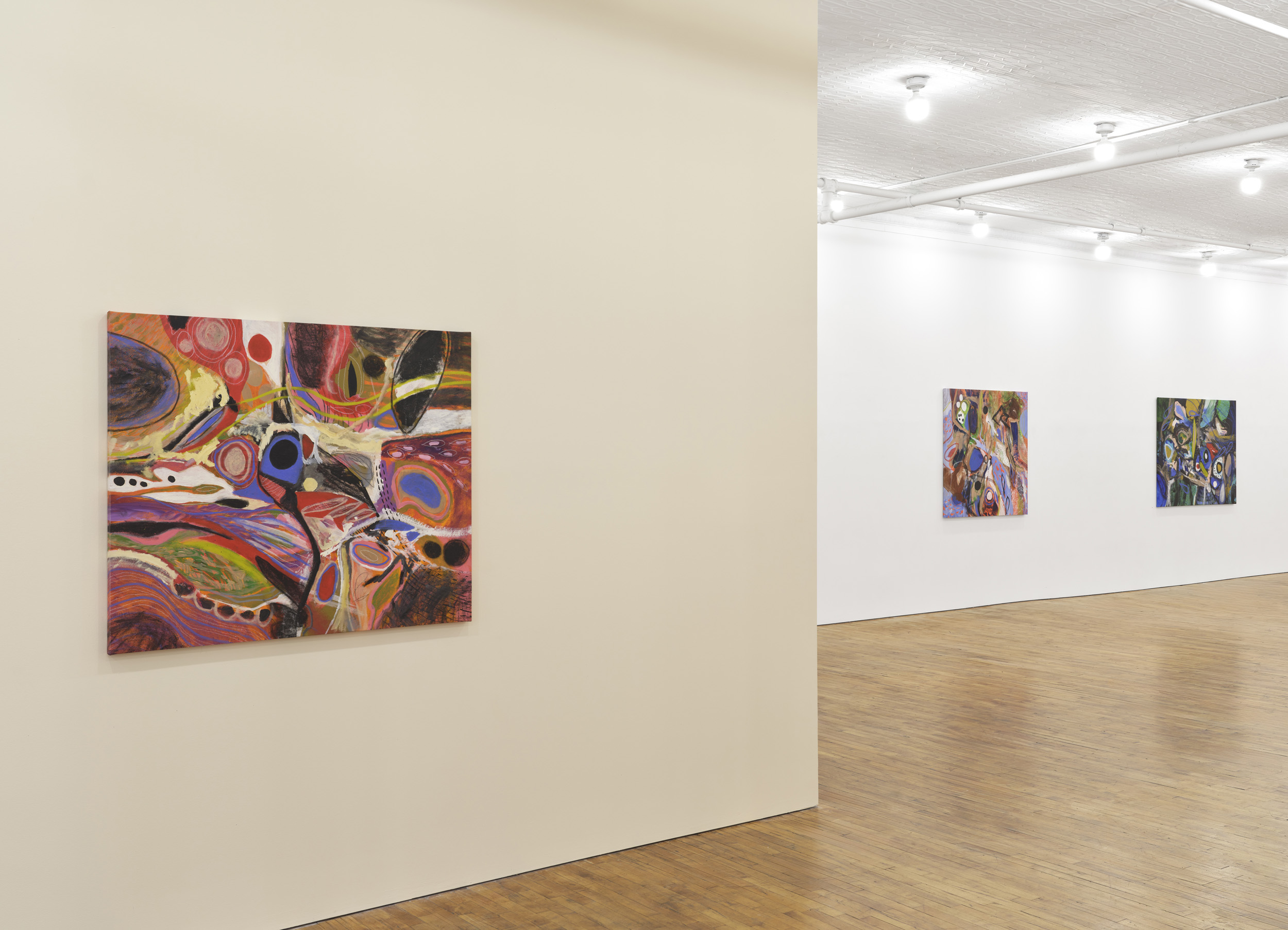
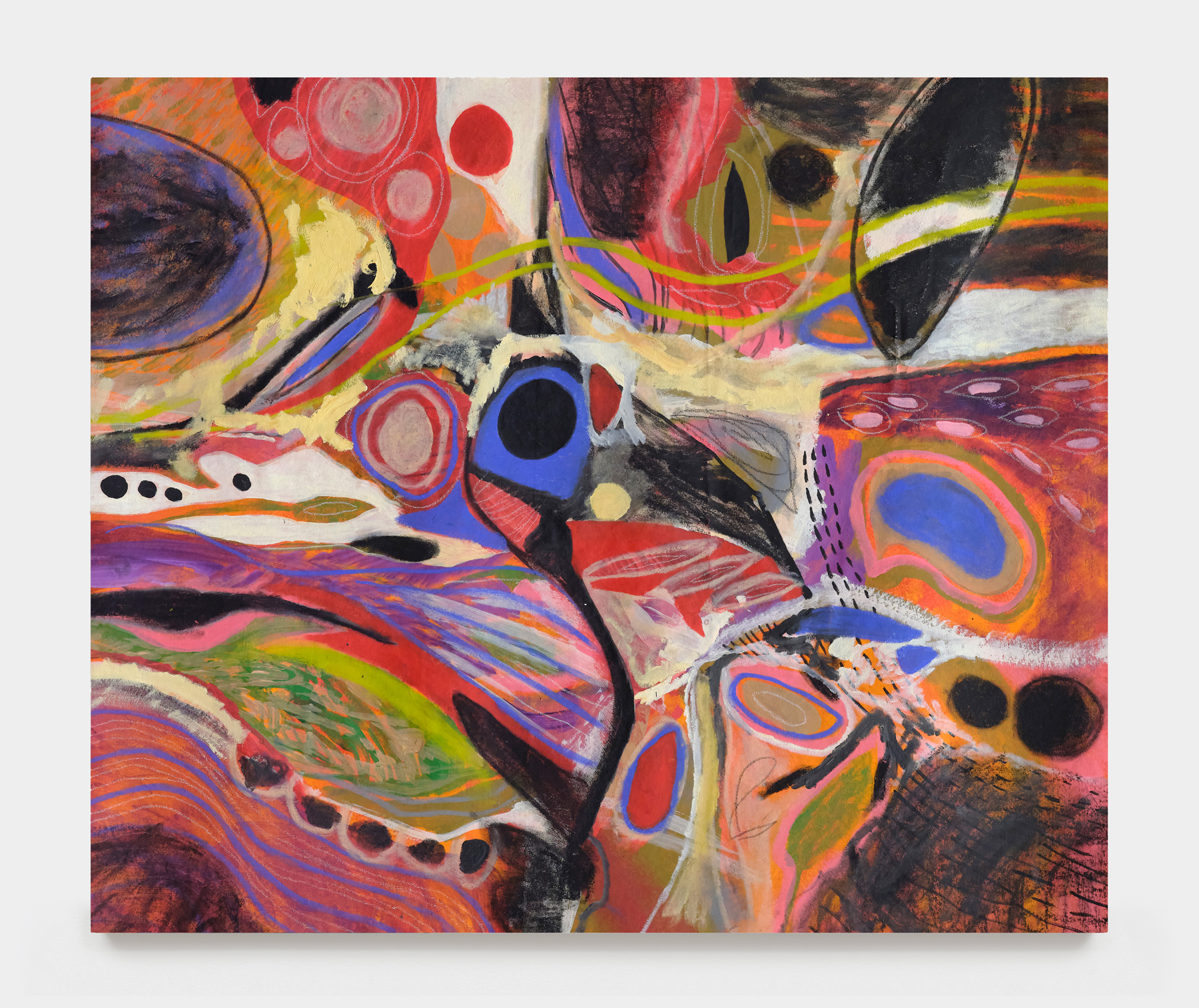
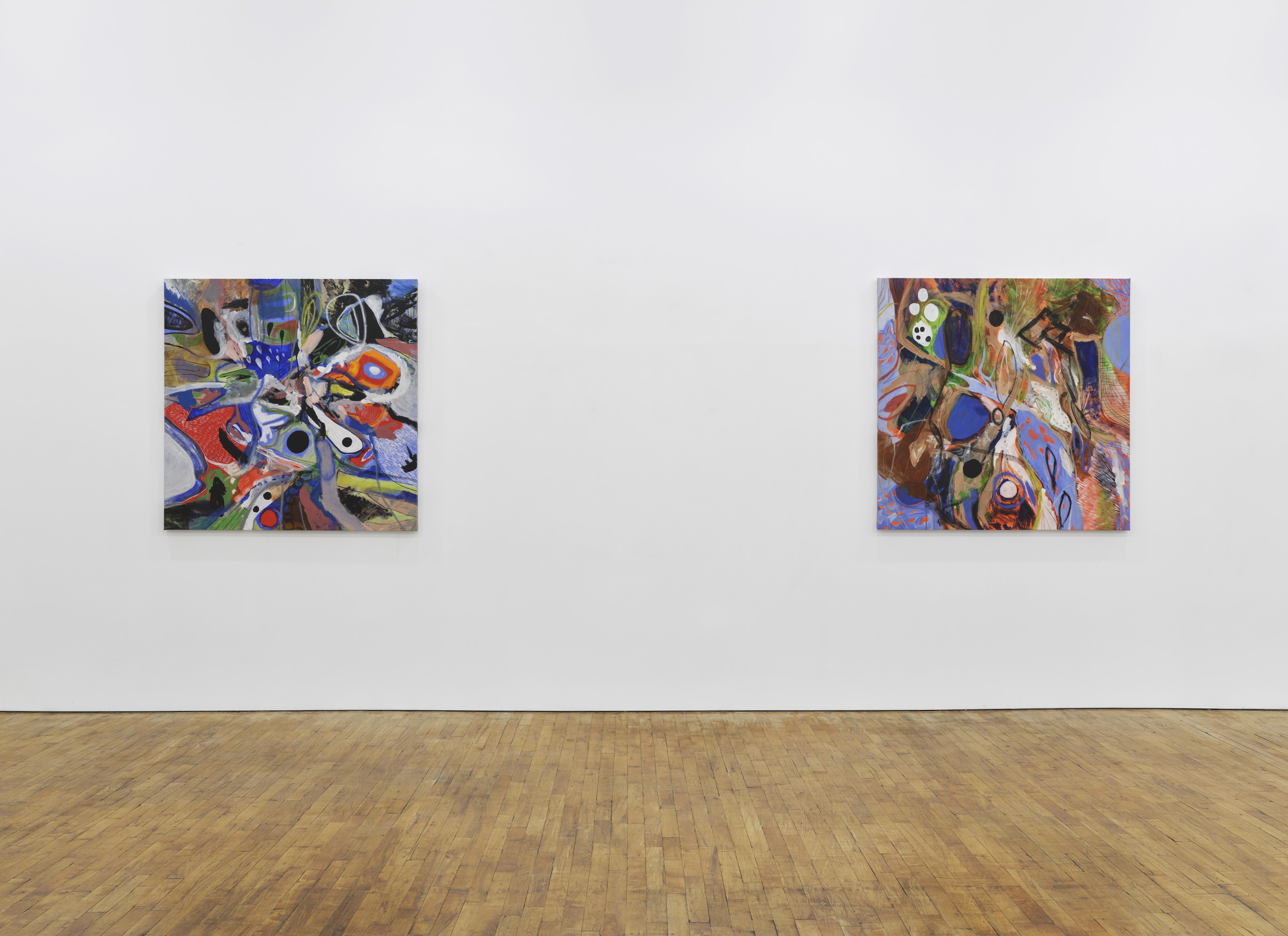
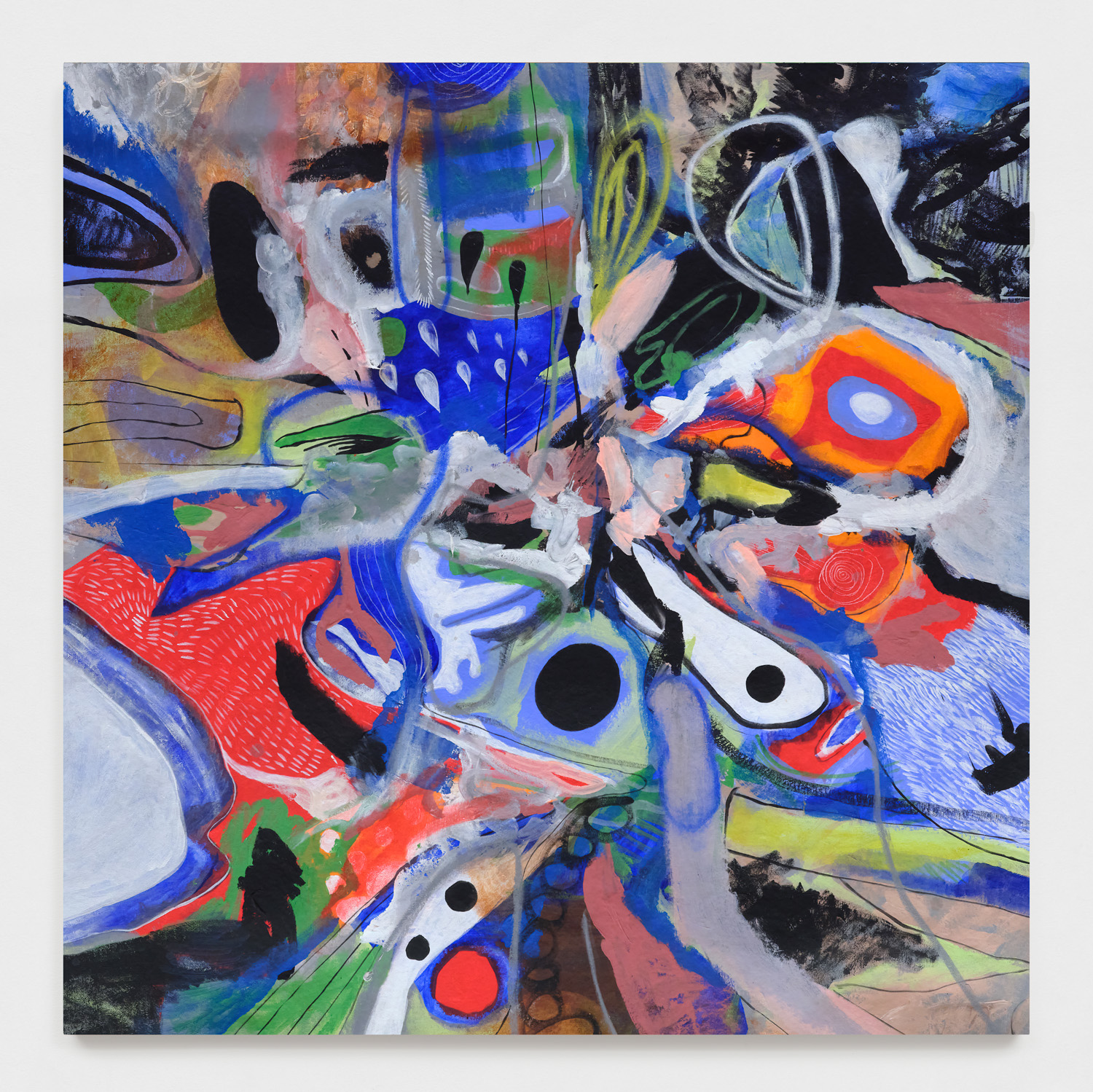
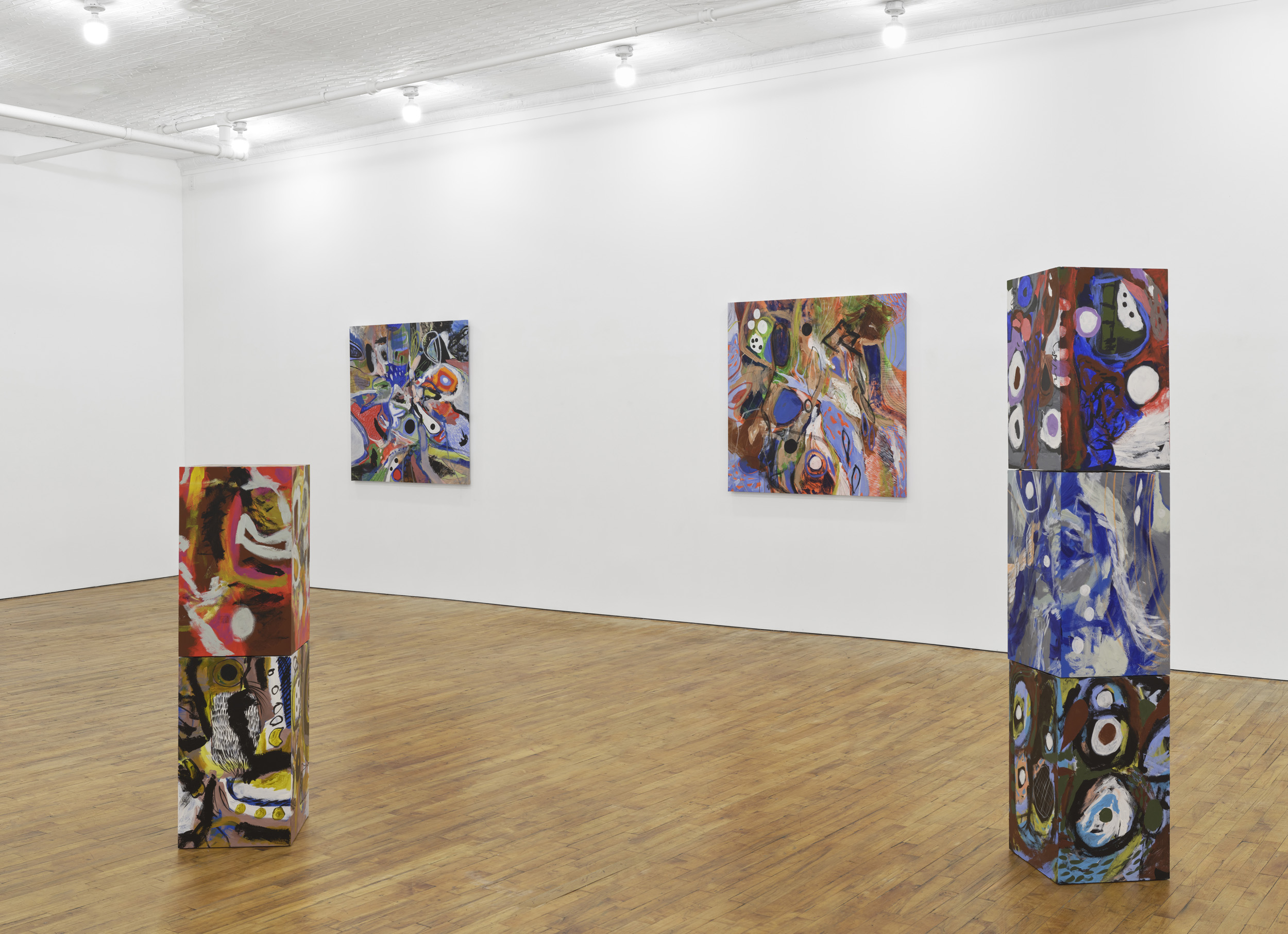
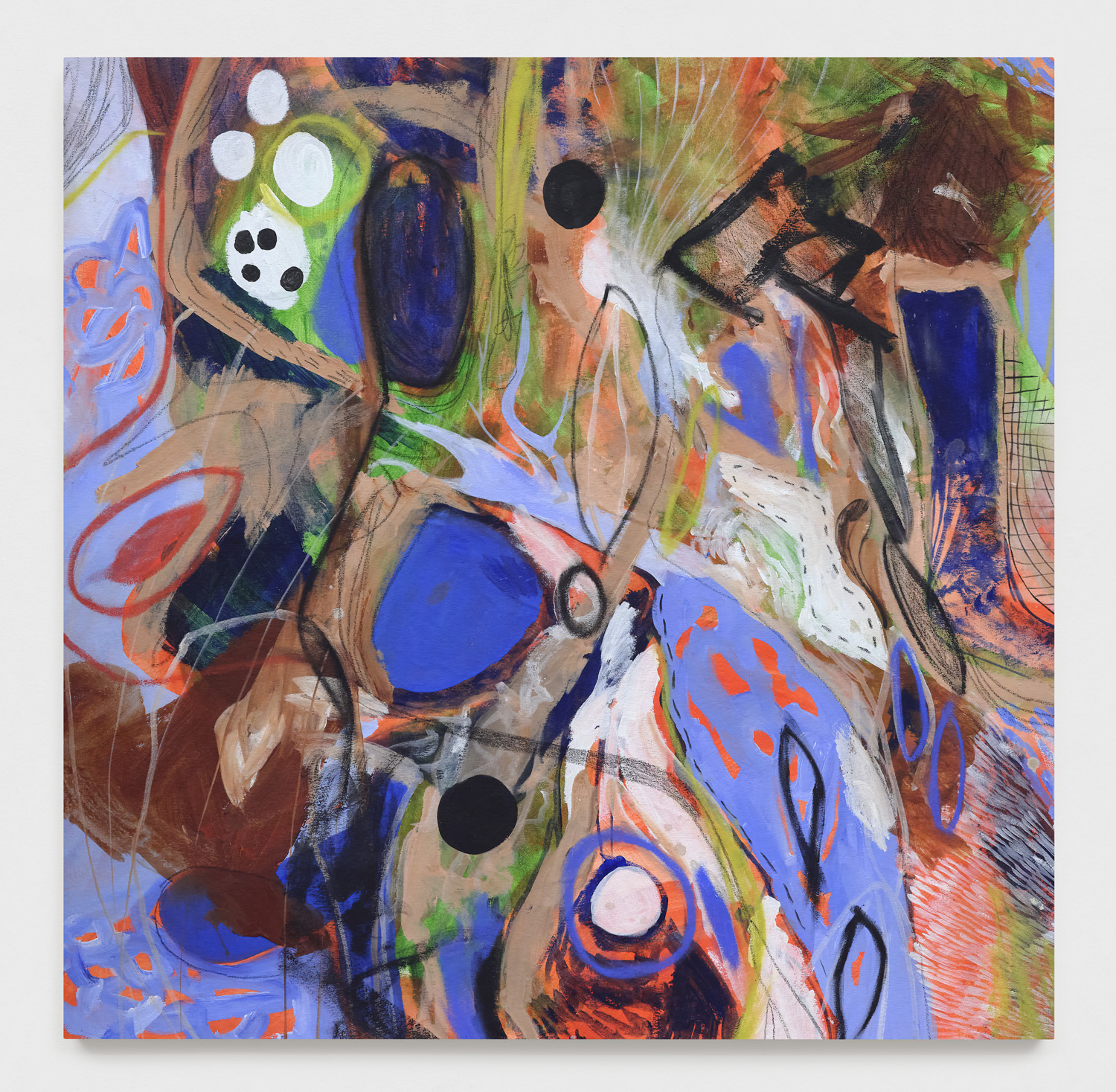
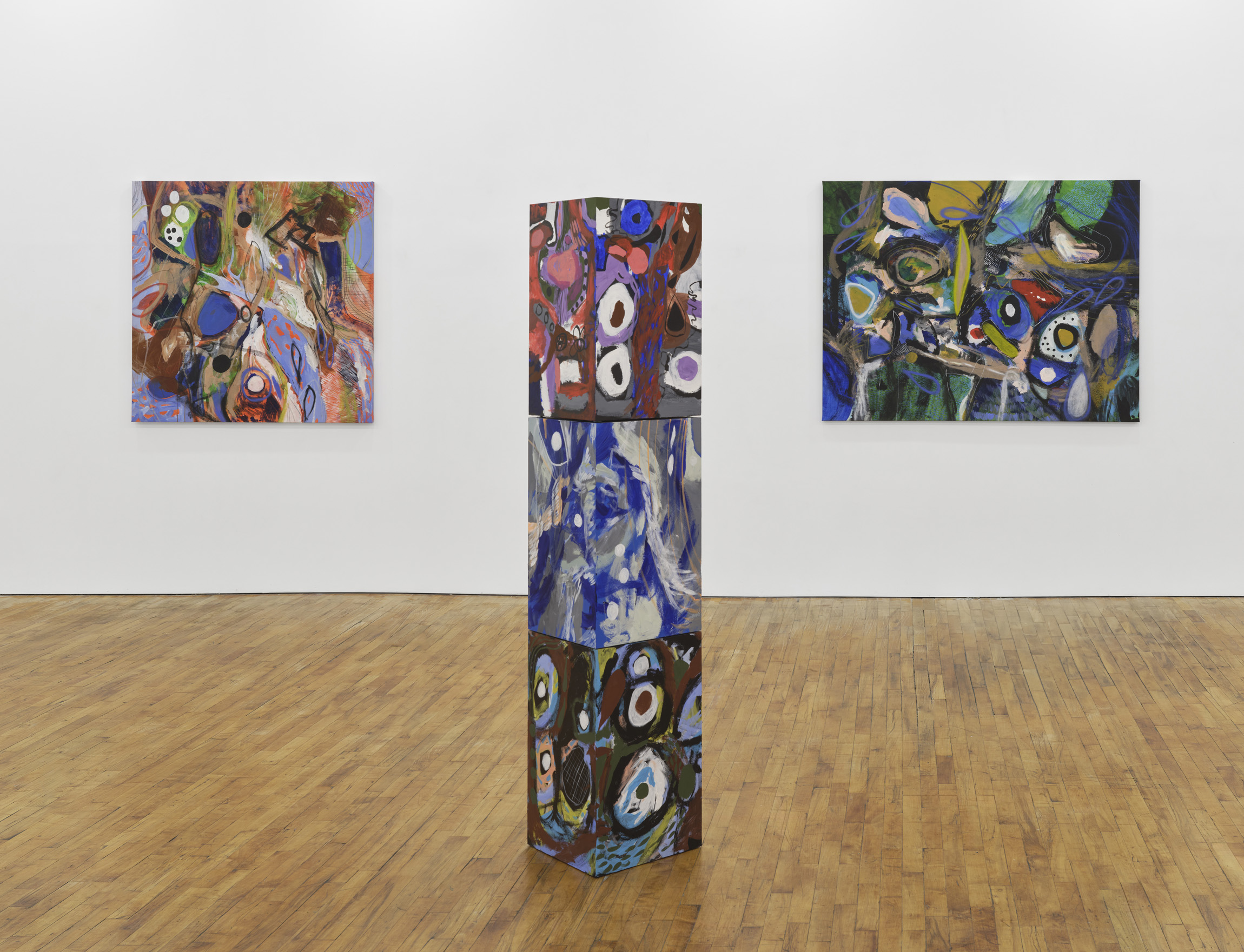
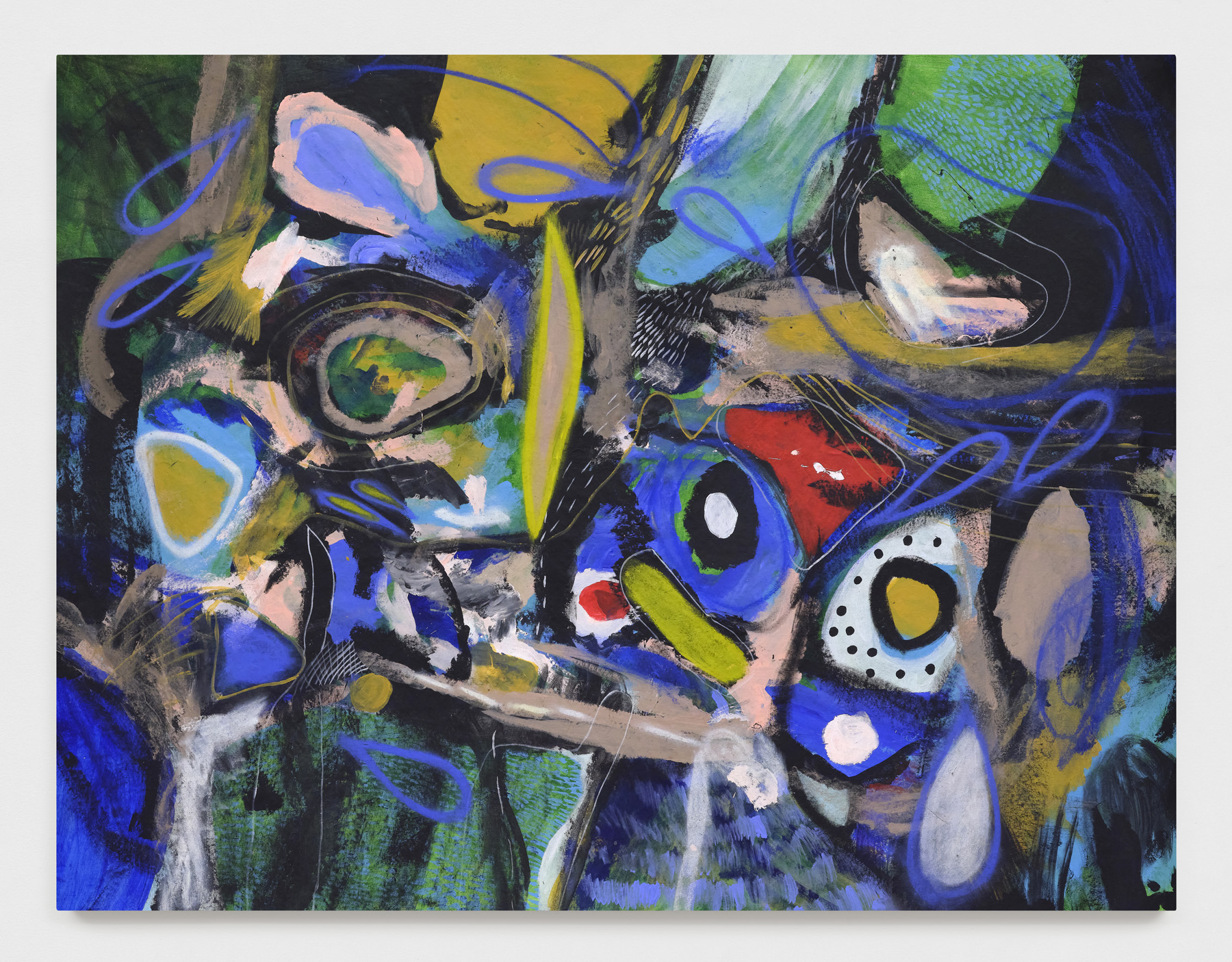
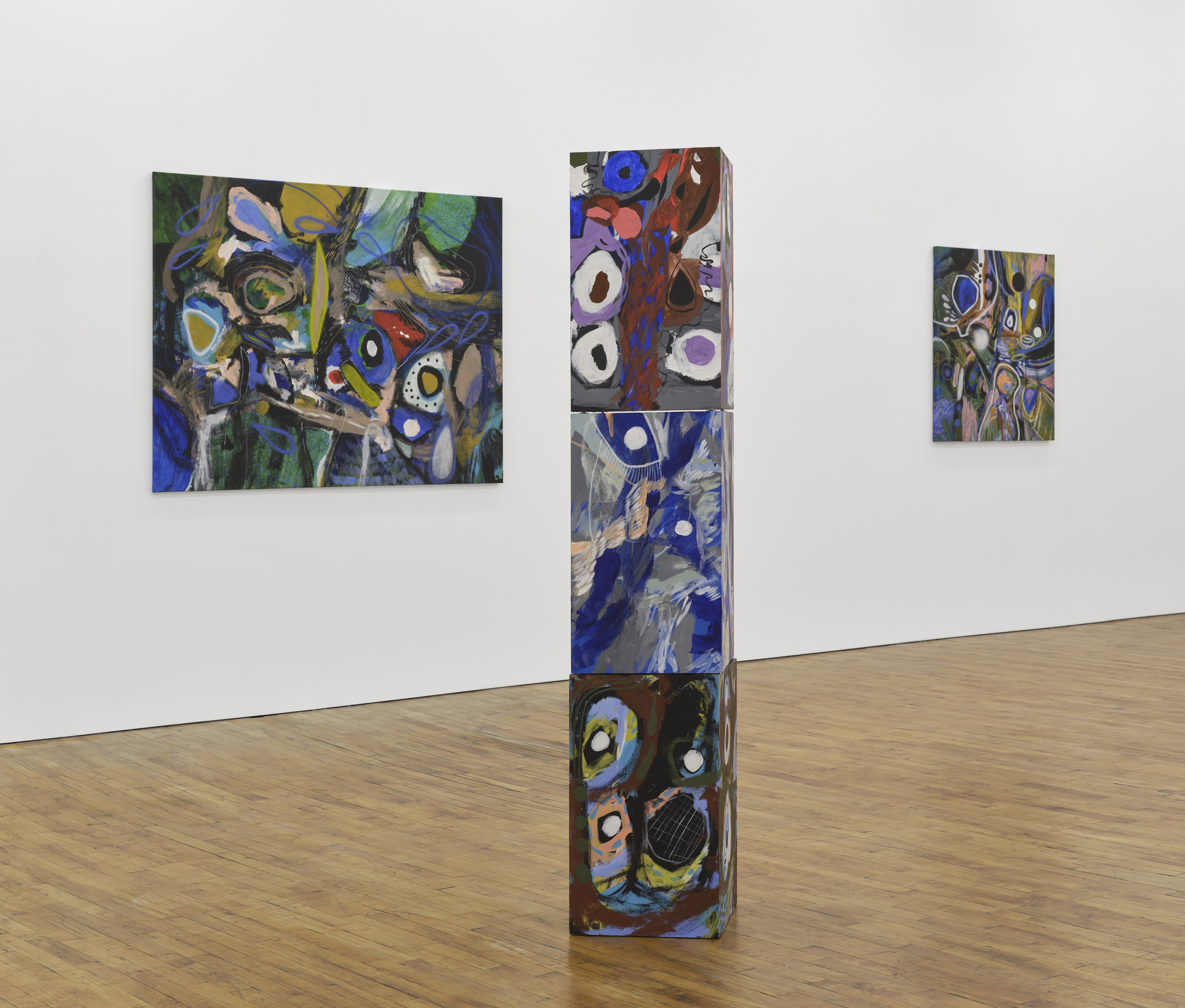
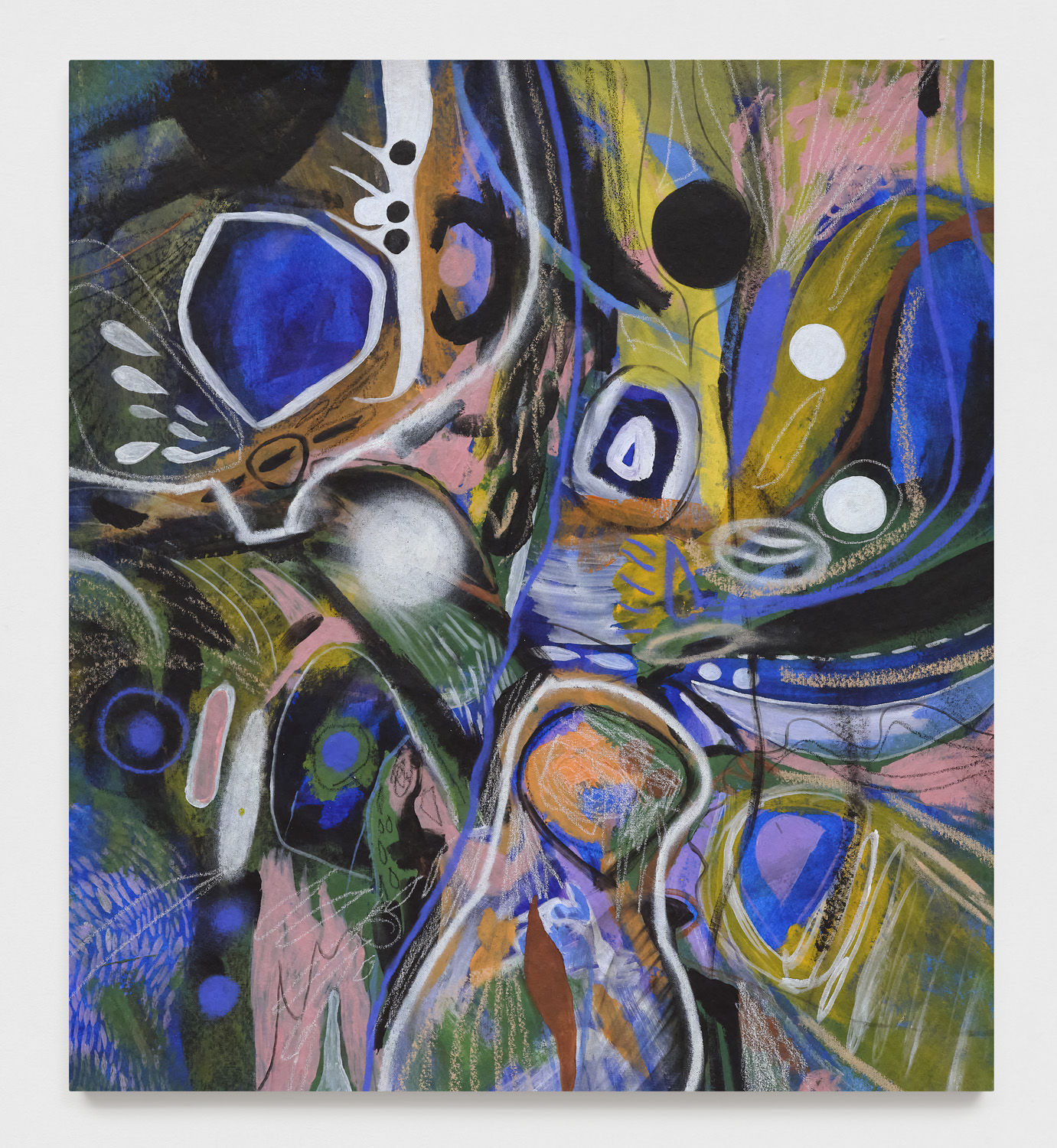
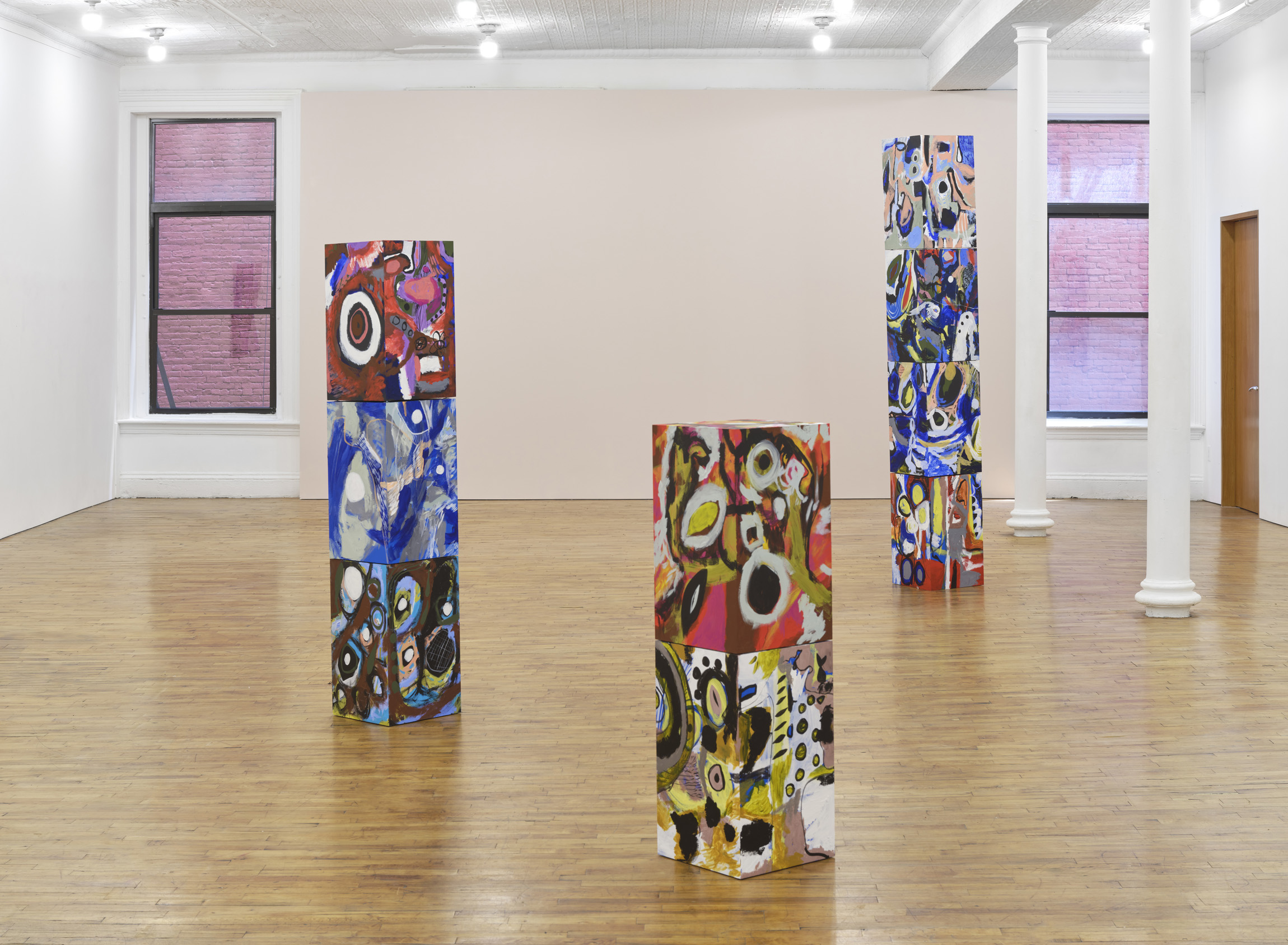
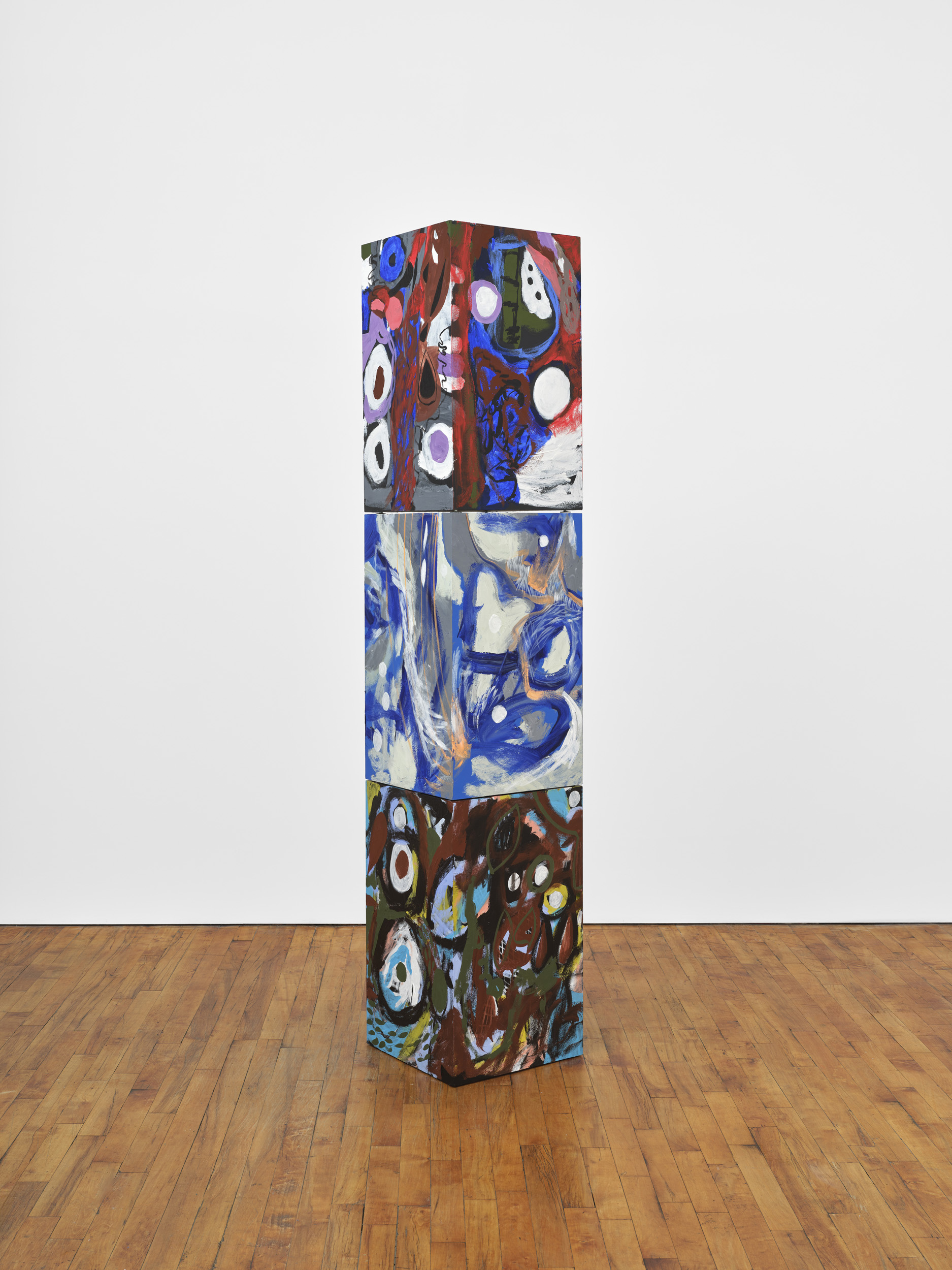
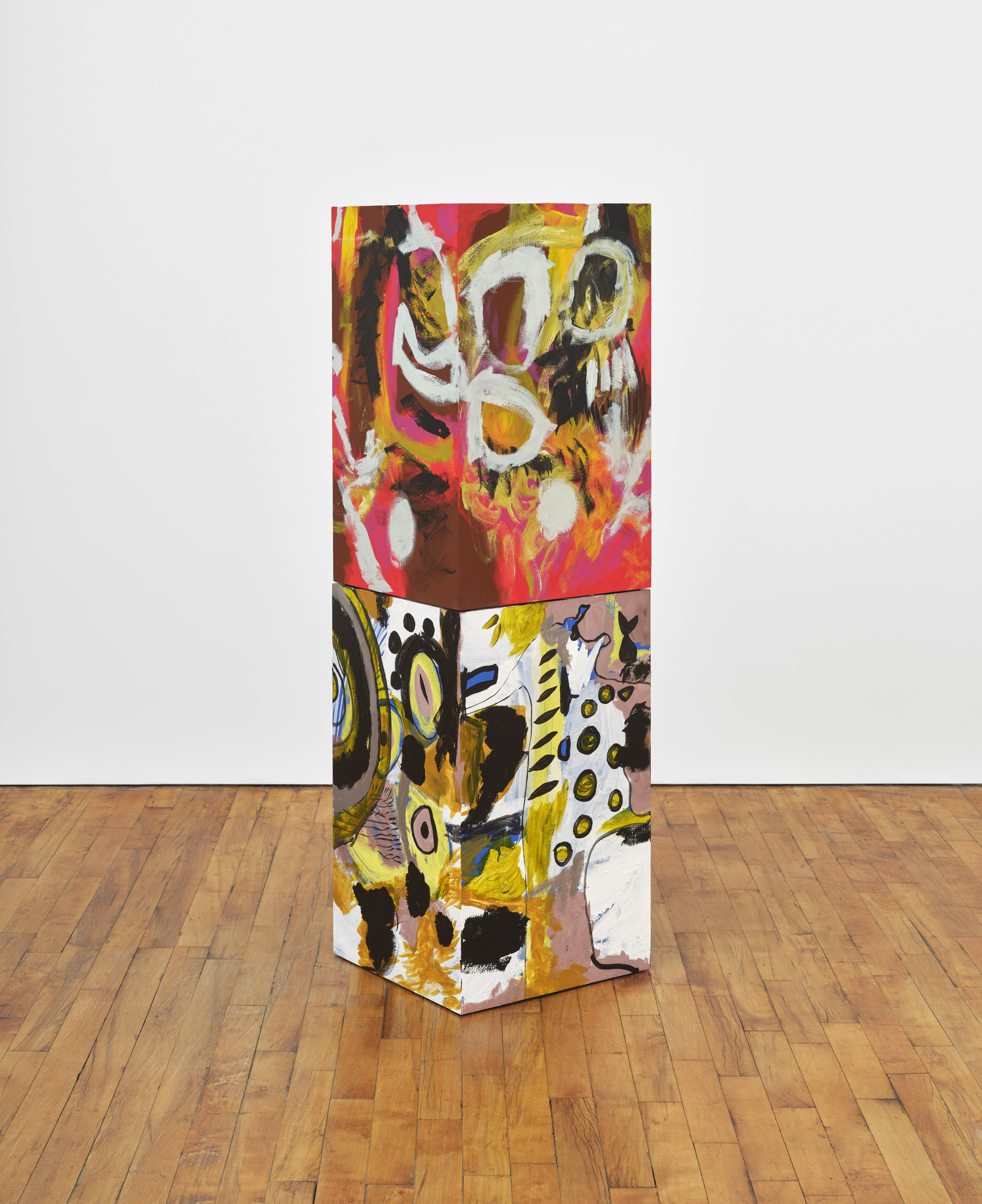
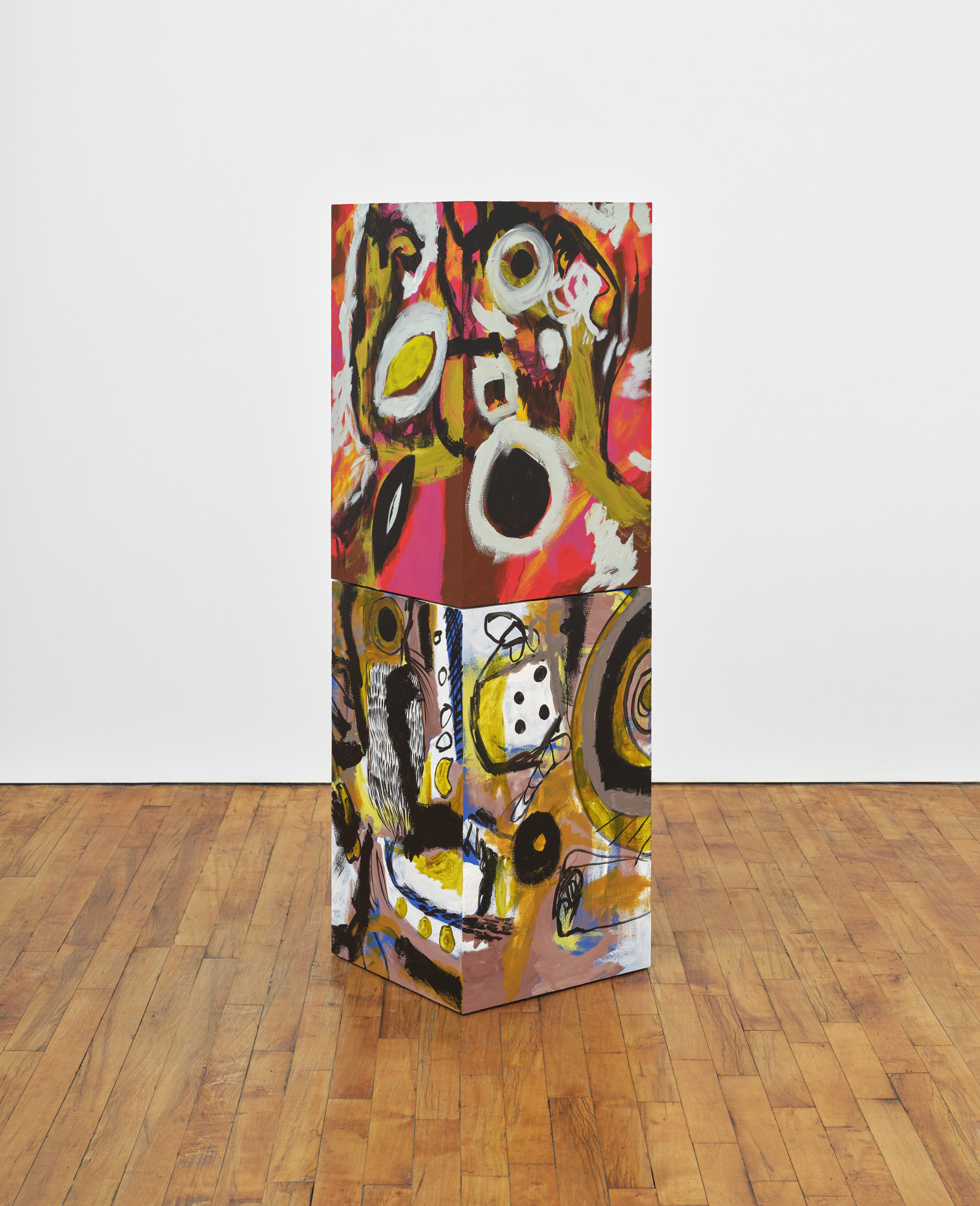
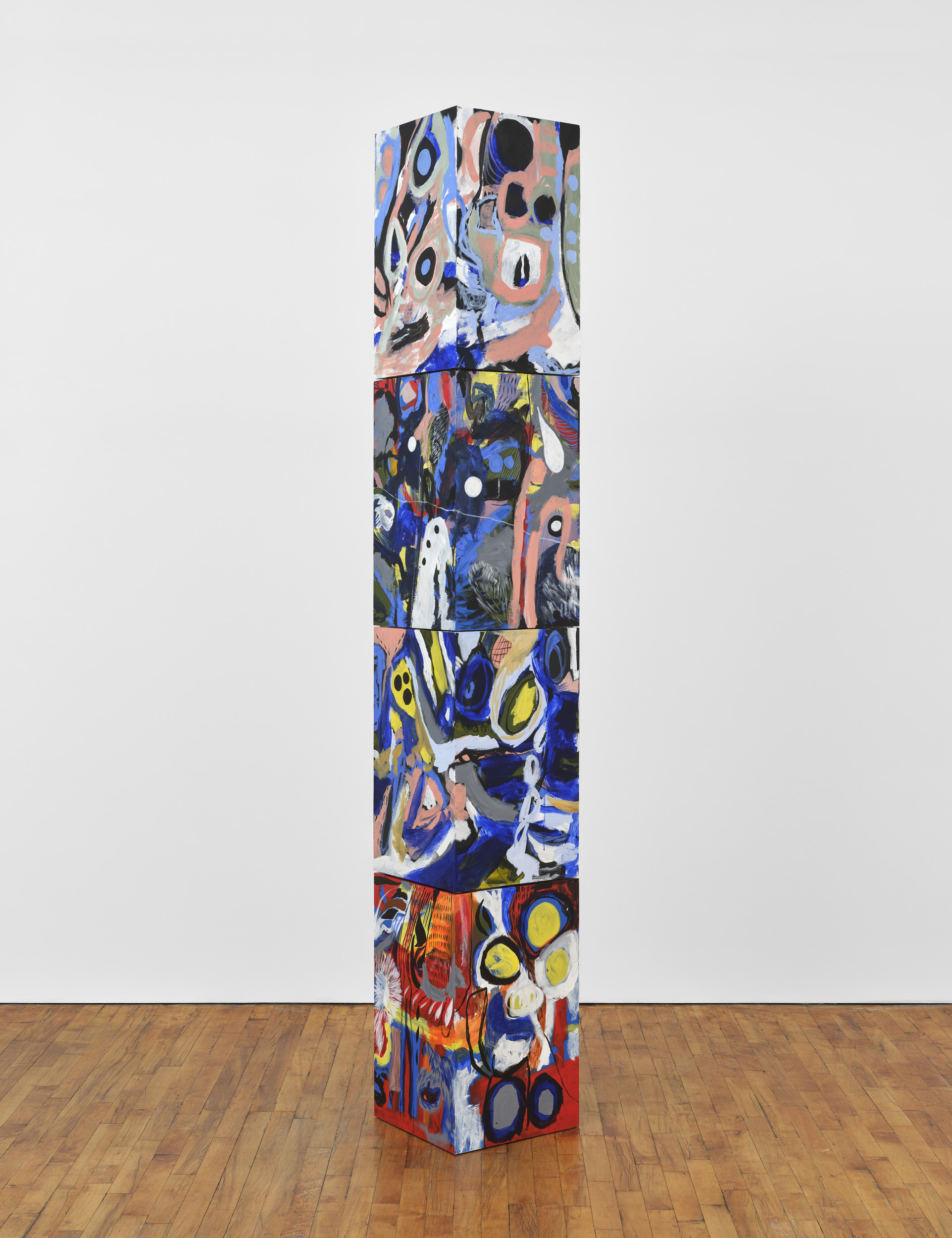
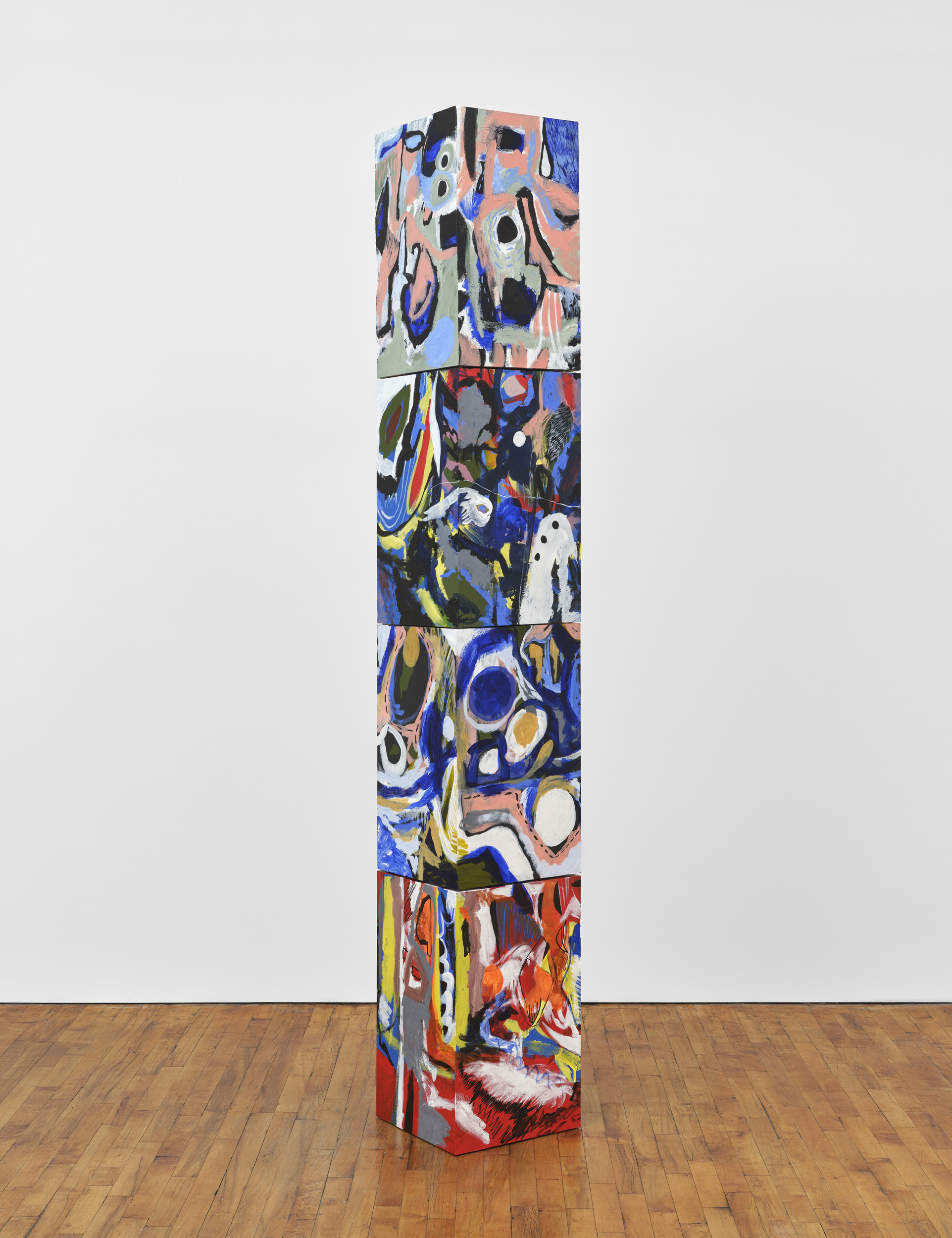
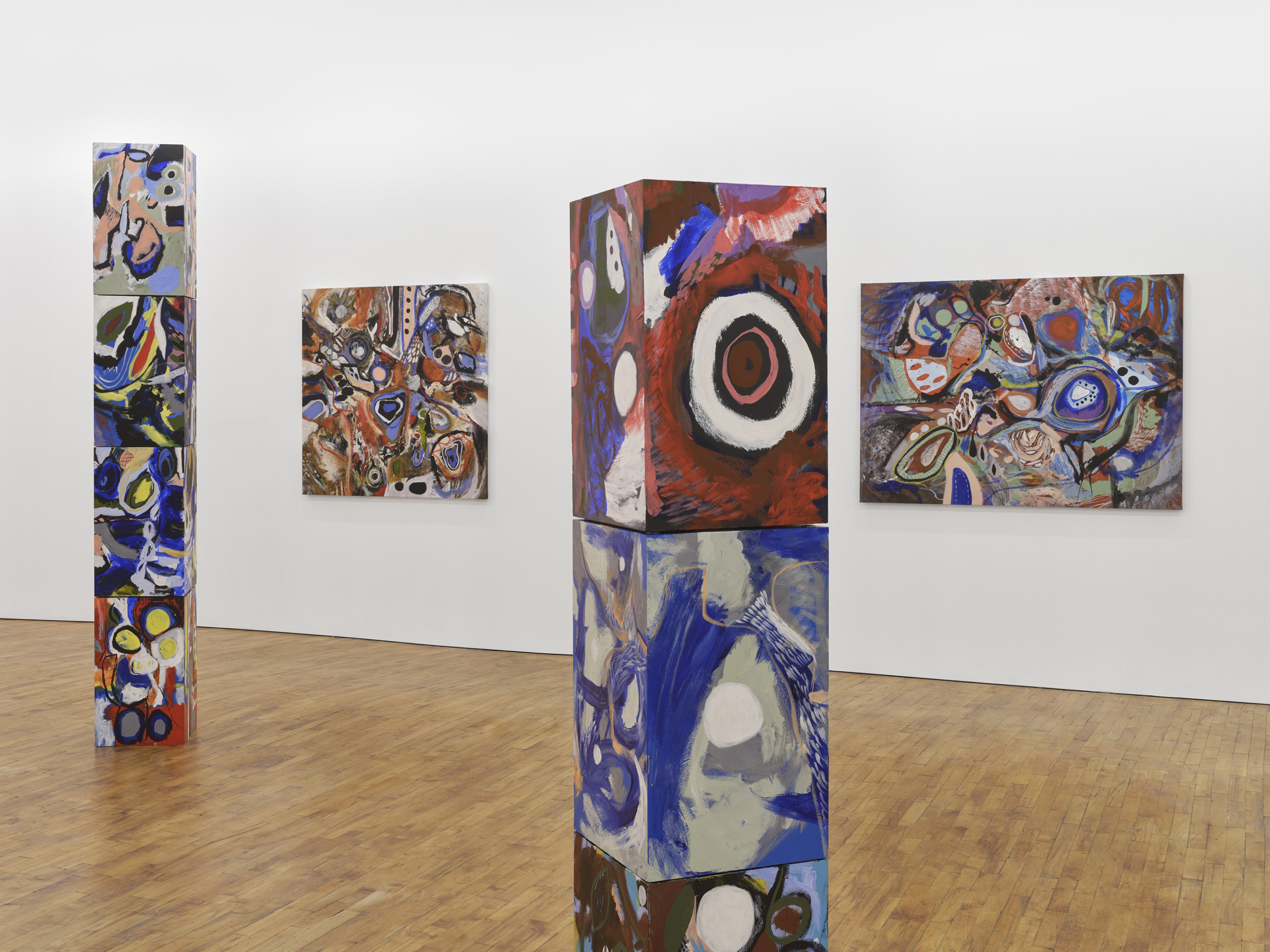
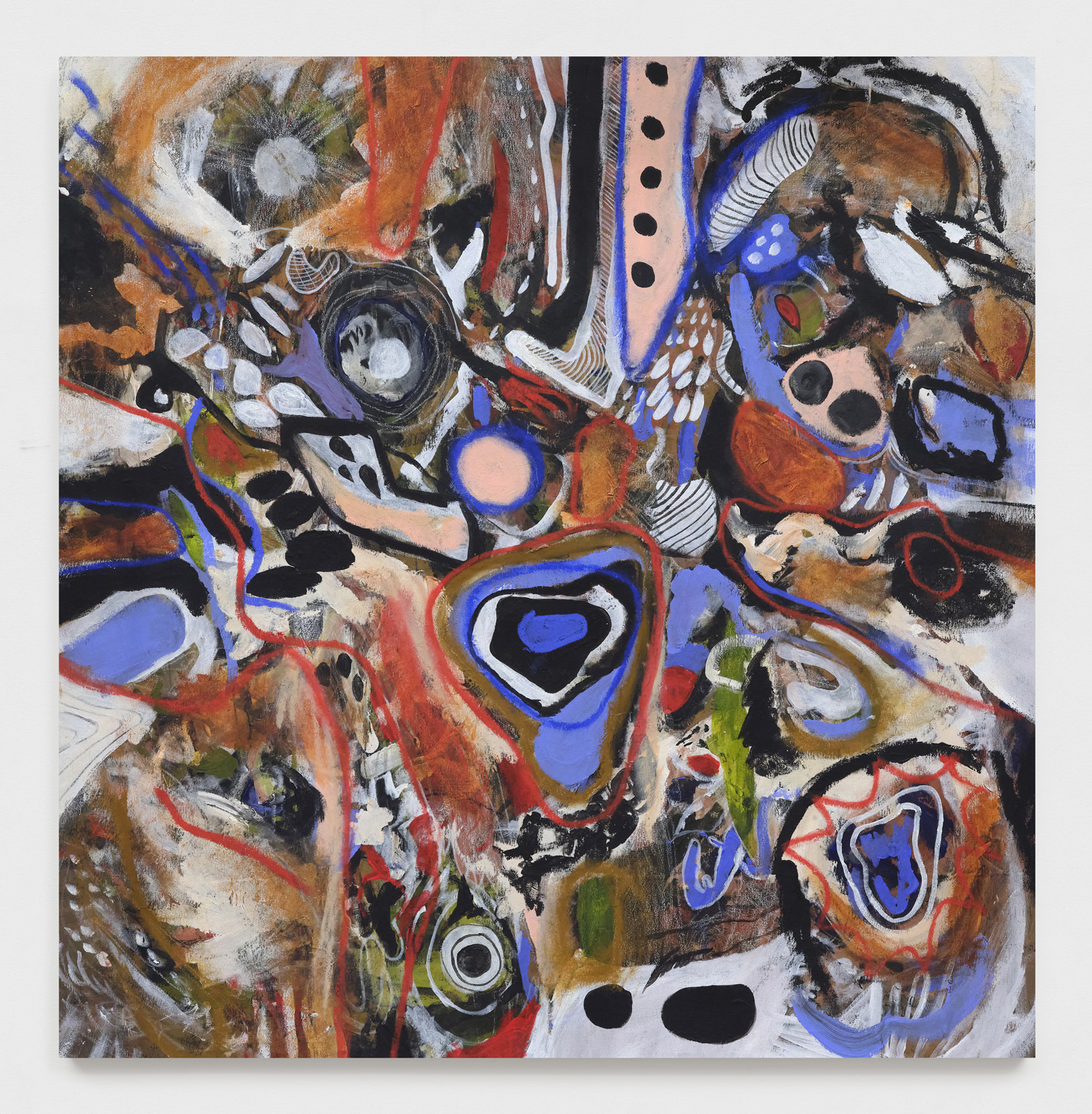
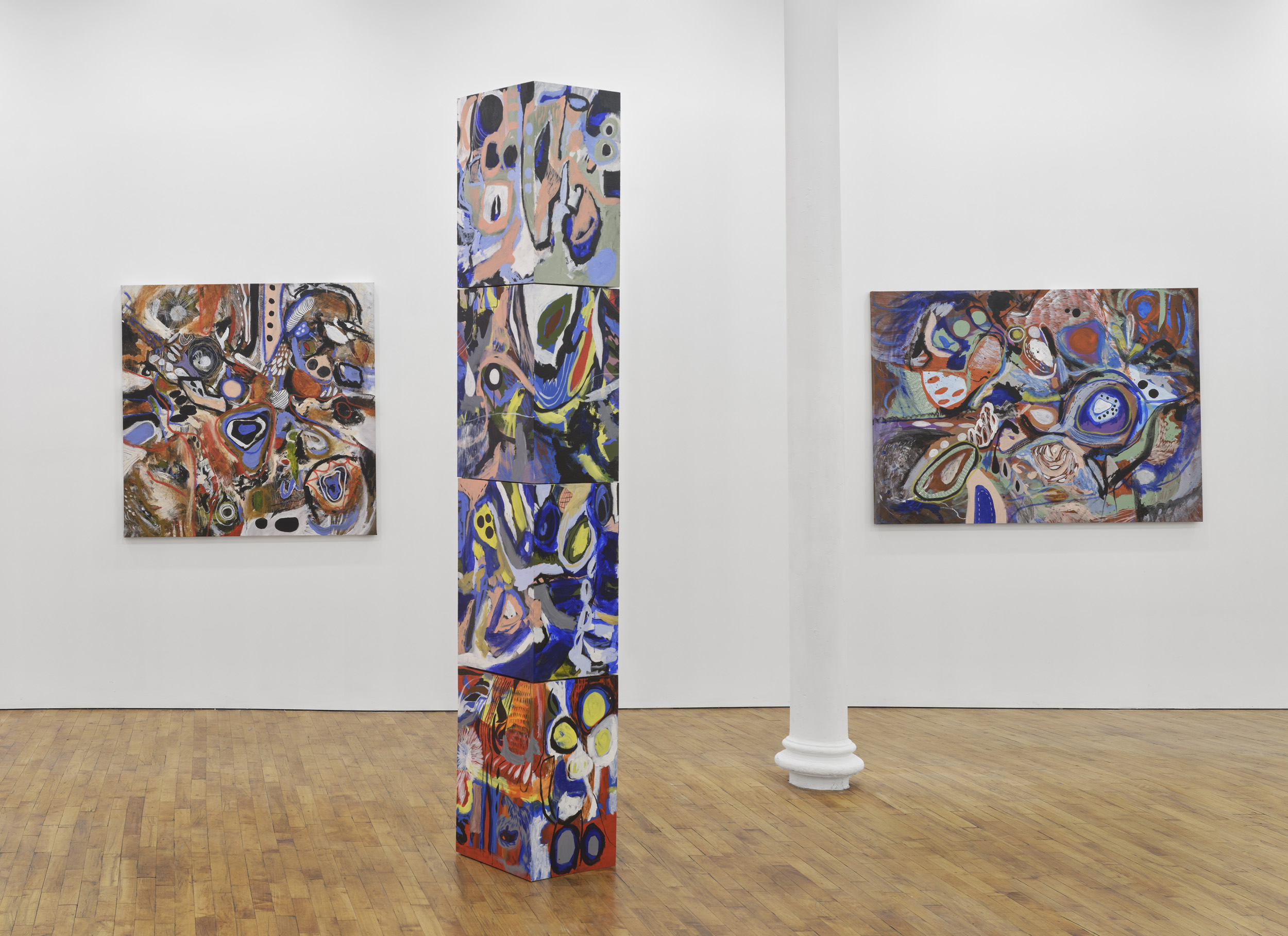
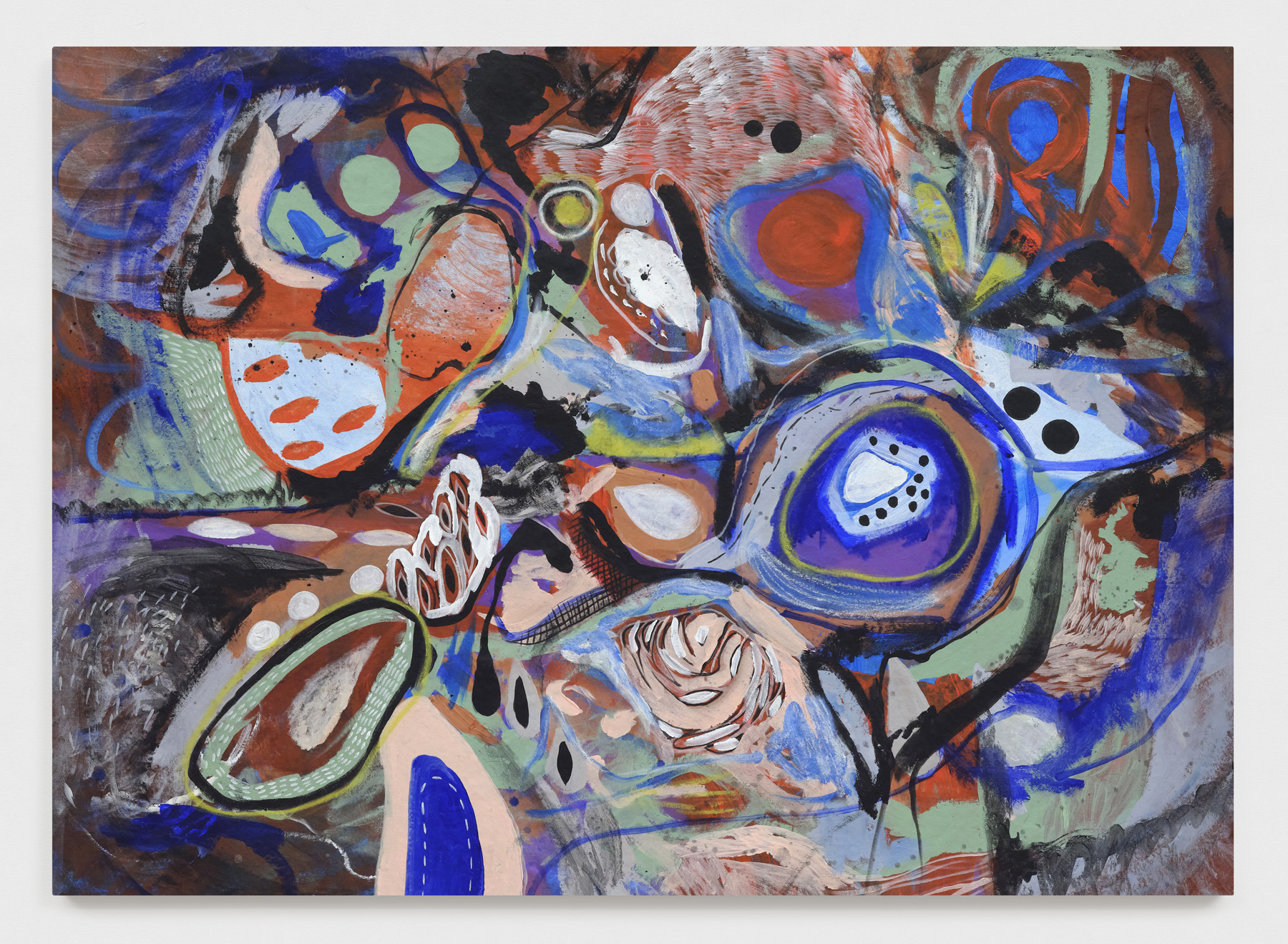
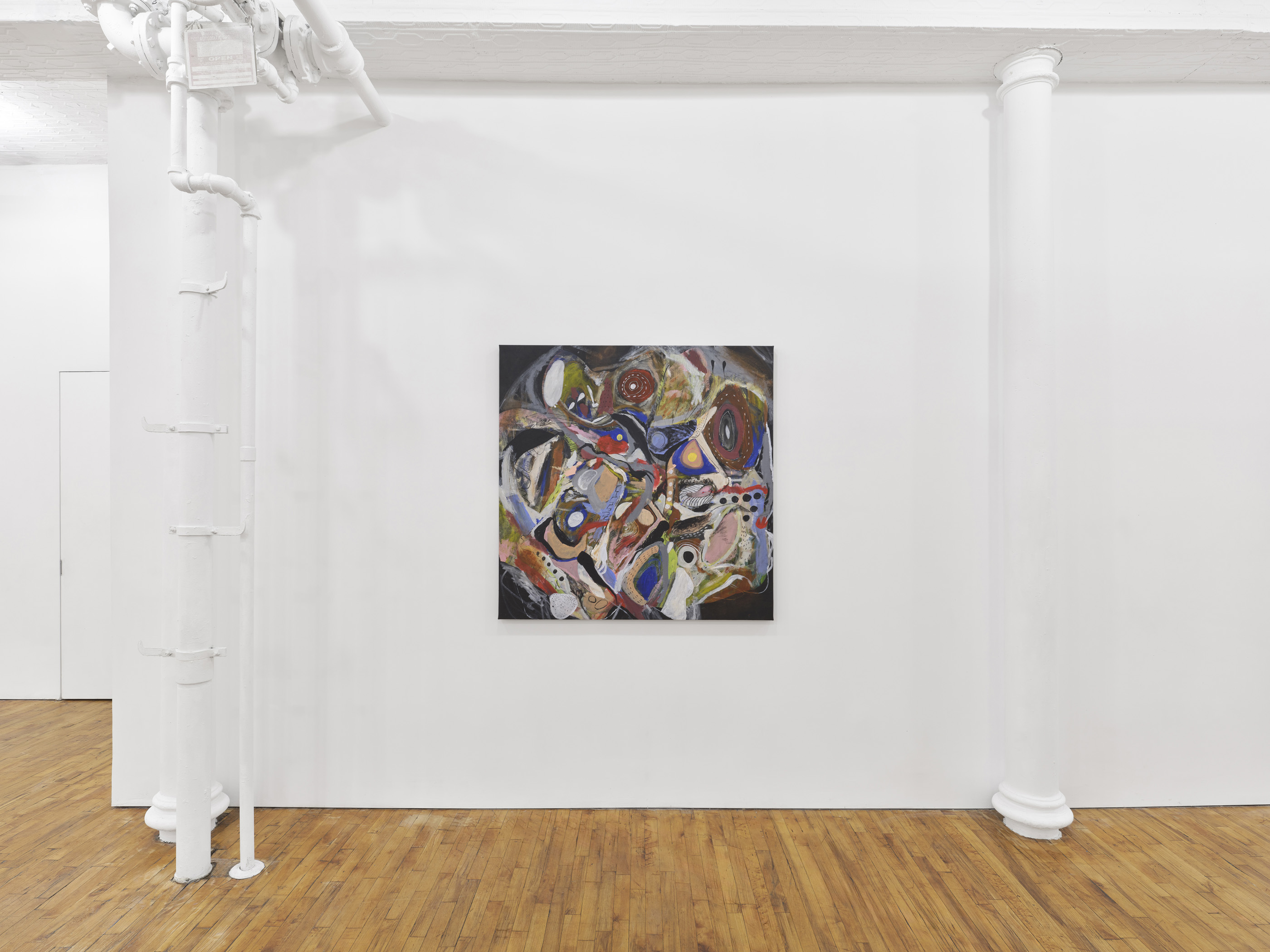
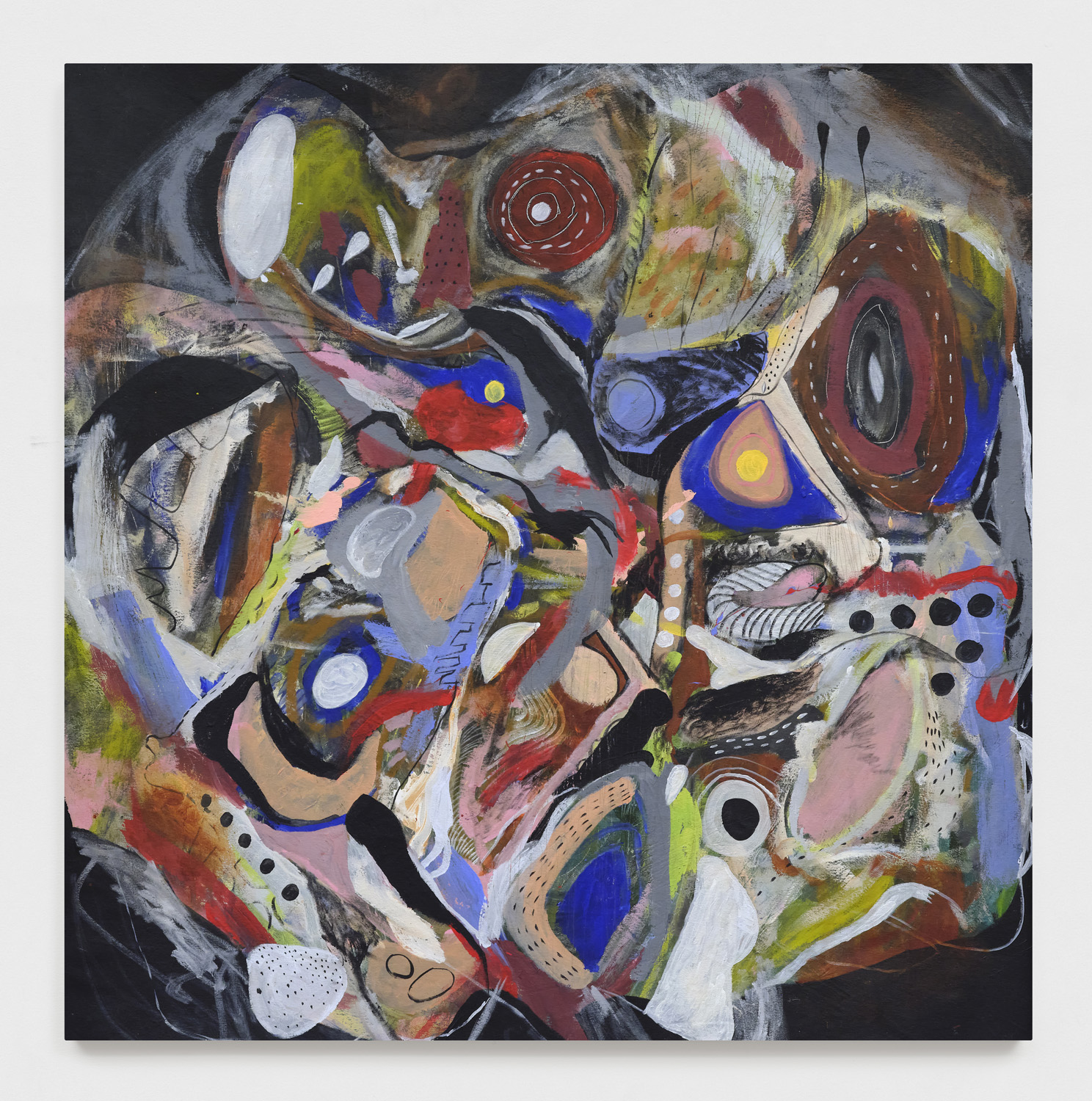
Tara Downs is pleased to announce a new exhibition of paintings and site-responsive sculpture by Nizhonniya Austin (Diné/Tlingit). Building upon the improvisatory abstraction of her acclaimed New York debut at the gallery, Austin’s newest body of work expands her painterly vocabulary into an immersive installation in which painting and sculpture activate a continuous experiential field. Executed in acrylic, oil stick, wax pencil, and looping drawn line, the canvases traverse ice blues, tidal greens, and mineral reds across registers ranging from cellular structures and geological strata to coastlines and distant star fields. Drawn from memories of the artist’s childhood home, from which the exhibition takes its title, Trying to Be Alaska, these works return to the geological and familial formations that shape her understanding of place.
Austin’s compositions marry the diagrammatic expansiveness of Julie Mehretu with the fluid biomorphism and unstable figure-ground relationships of Arshile Gorky and Elizabeth Murray, together with the crystalline luminosity of Charles Seliger, while remaining unmistakably her own. Beneath their exuberant formal invention lies a distinctly kincentric worldview, in which land, animal, ancestor, weather, and bodily presence are understood as mutually constitutive discrete domains. The looping circularity that courses through the paintings bears the imprint of Austin’s training as a dancer: each canvas is worked upon the studio floor, recalling the embodied spatial logic of Diné sandpainting, through a process that is at once improvisational and diaristic. Performance likewise forms an integral strand of Austin’s practice, extending from the studio to her lauded portrayal of the indigenous artist Cara Durand in The Curse (2023) alongside Nathan Fielder and Emma Stone, a role exploring tensions between cultural identity and its public representation.
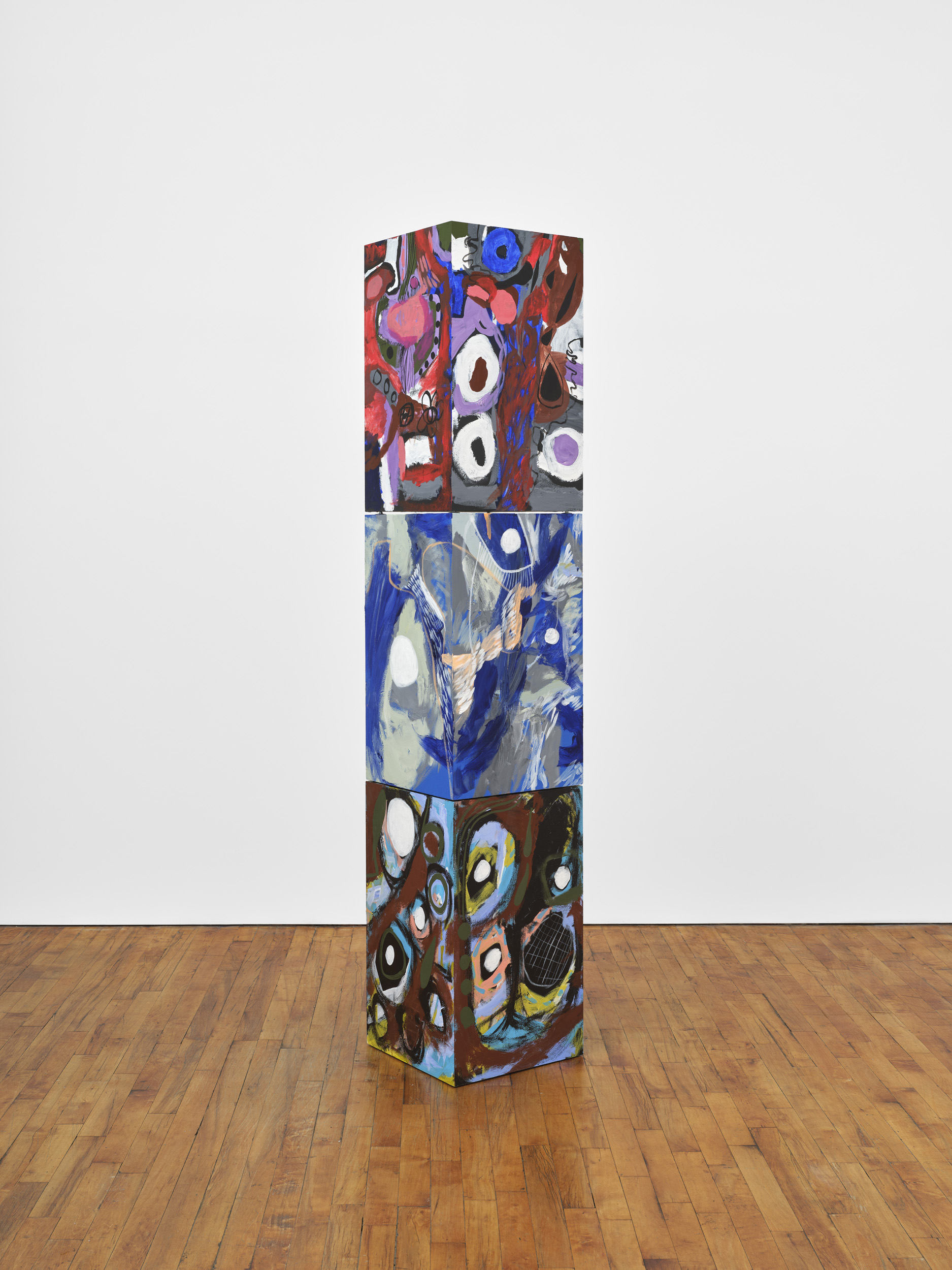
The exhibition inaugurates Austin’s extension of these formal and conceptual concerns into sculpture through a group of monumental painted totems conceived in dialogue with Red Totem I (1977) by George Morrison (Ojibwé), in the collection of the Minneapolis Institute of Art. Their vertical format punctuates the exhibition’s spatial grammar while redirecting the modernist column toward questions of ancestral continuity, cultural inheritance, and the transmission of knowledge across generations. Installed among paintings whose titles evoke fragments of poetry (Love Crimes in Alaska, Moth Country and the Opal Dynasty, and My Mother Was Born on Dirt Floor and Every Grain Was a Gemstone), the sculptures establish a rhythmic architectural presence that encourages viewers to navigate the gallery as a single environmental composition. Cumulatively, the paintings and sculptures mark a significant expansion of Austin’s practice contributing to the evolving language and expanding genealogy of abstraction.