
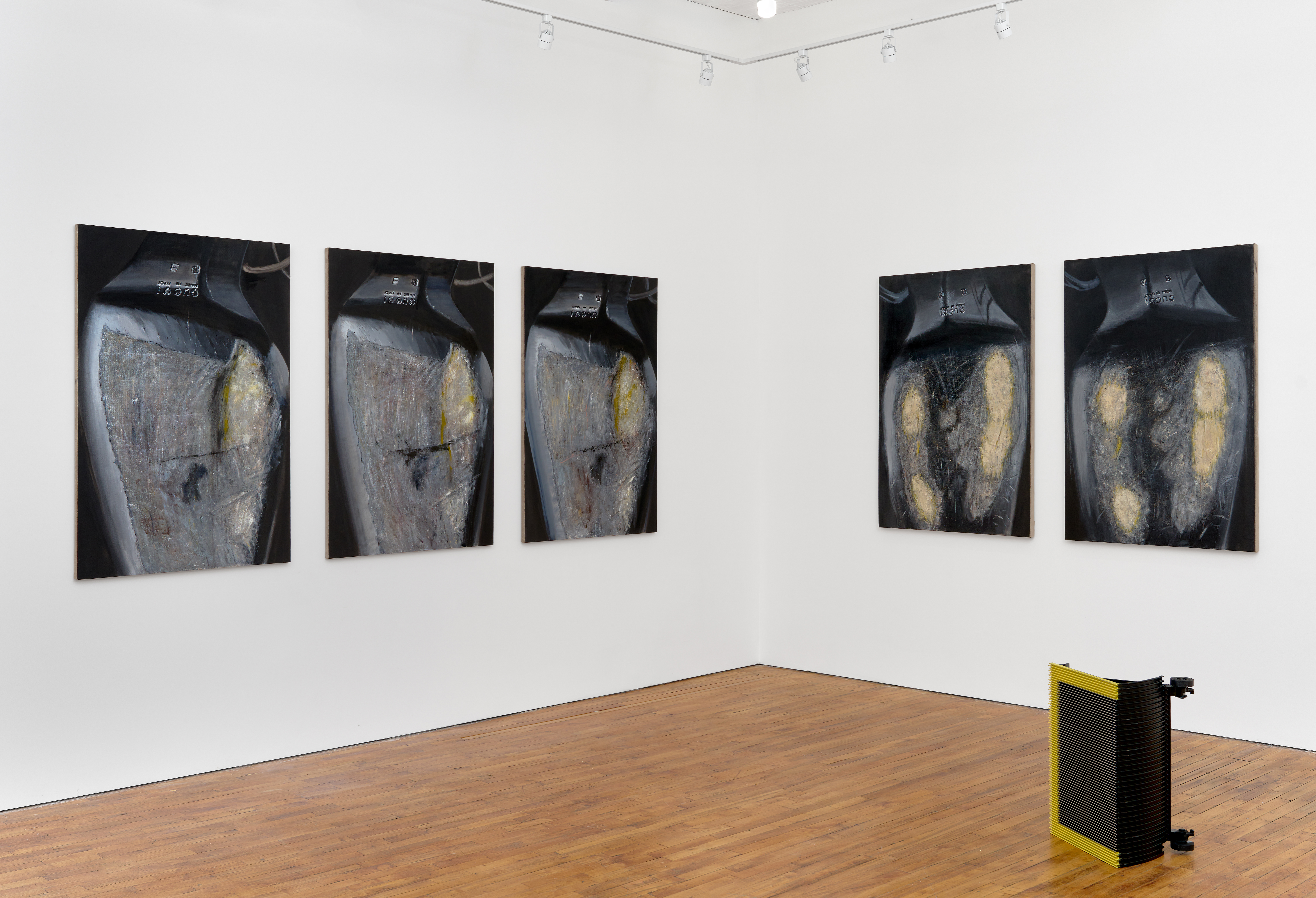
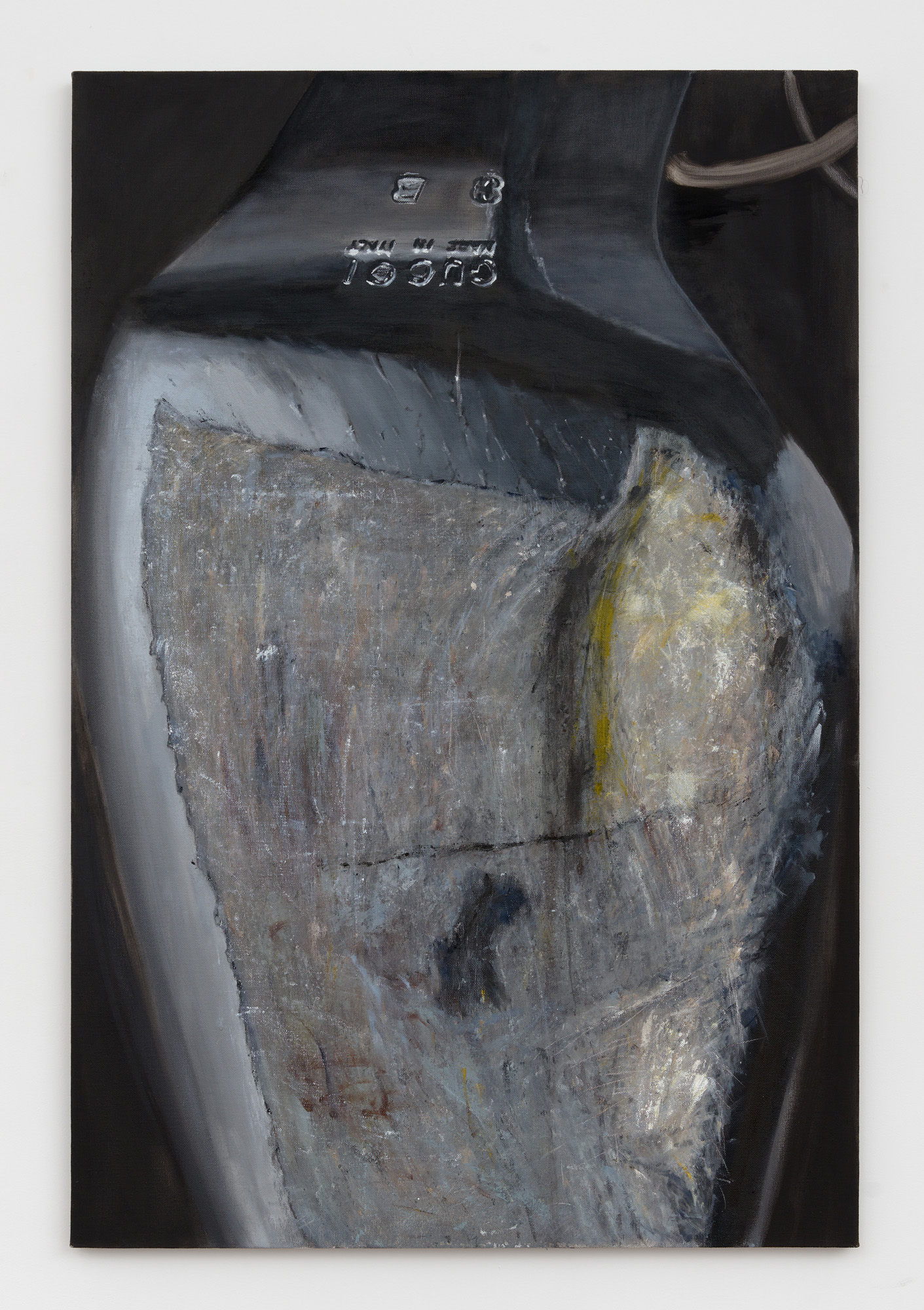
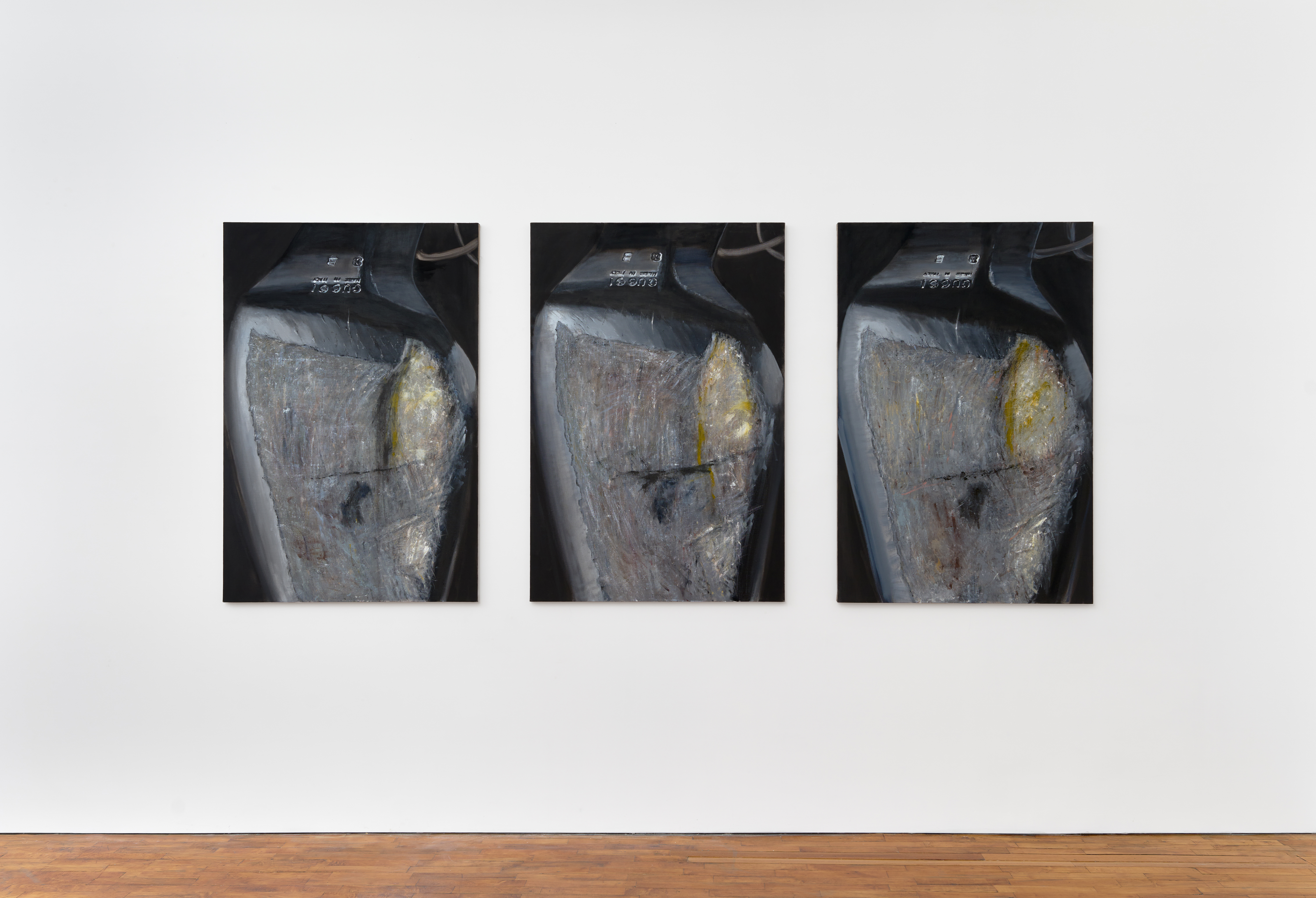
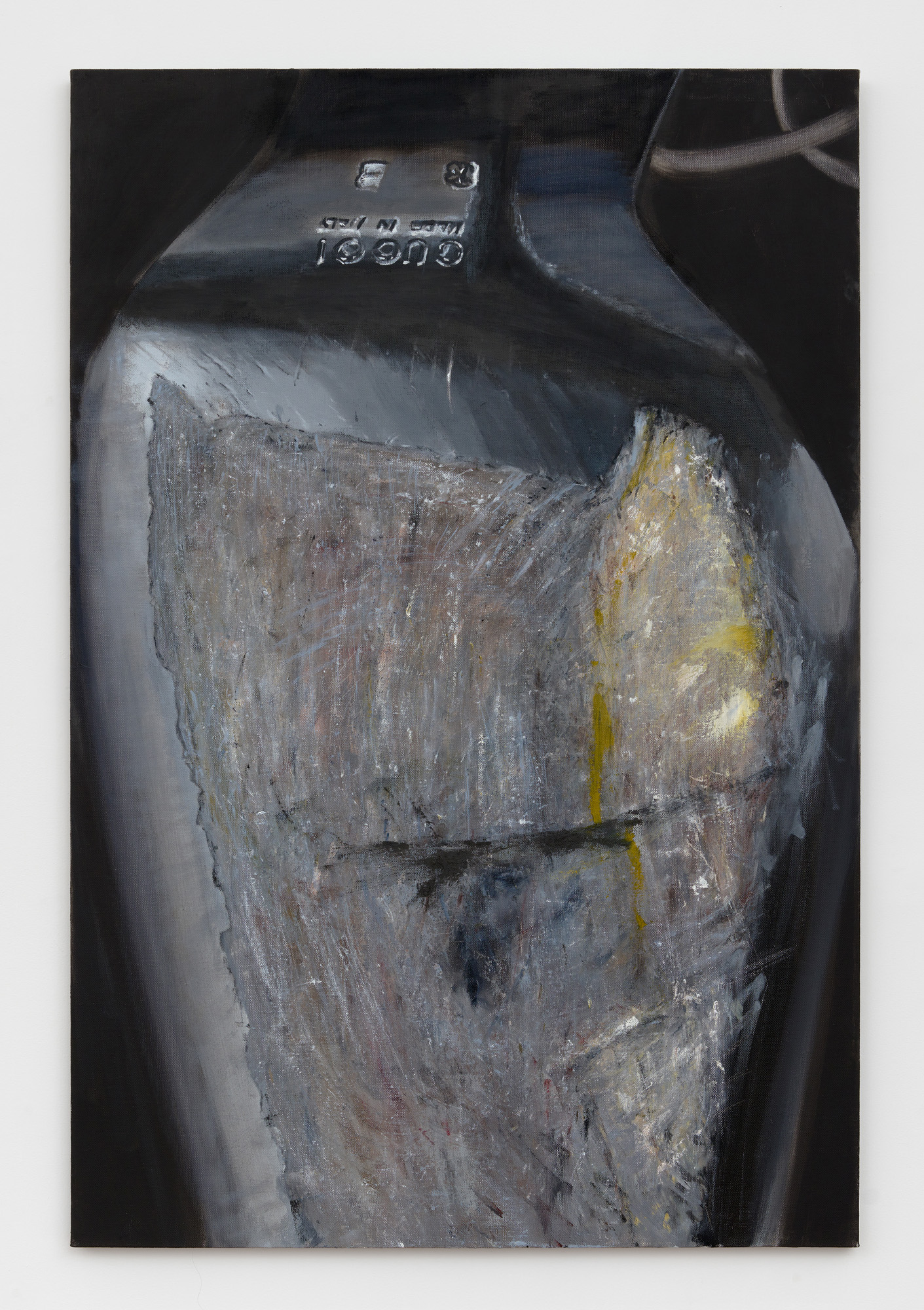
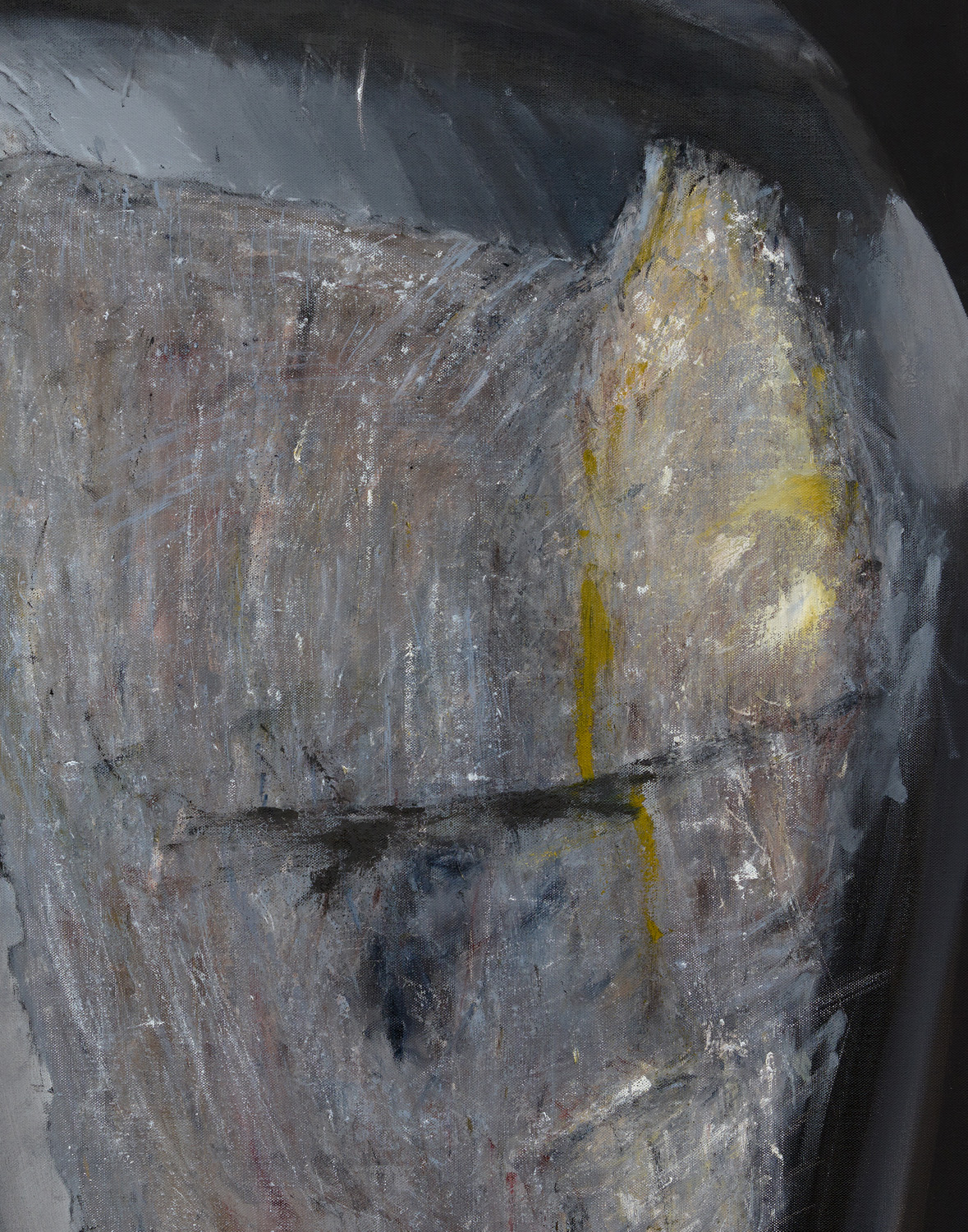
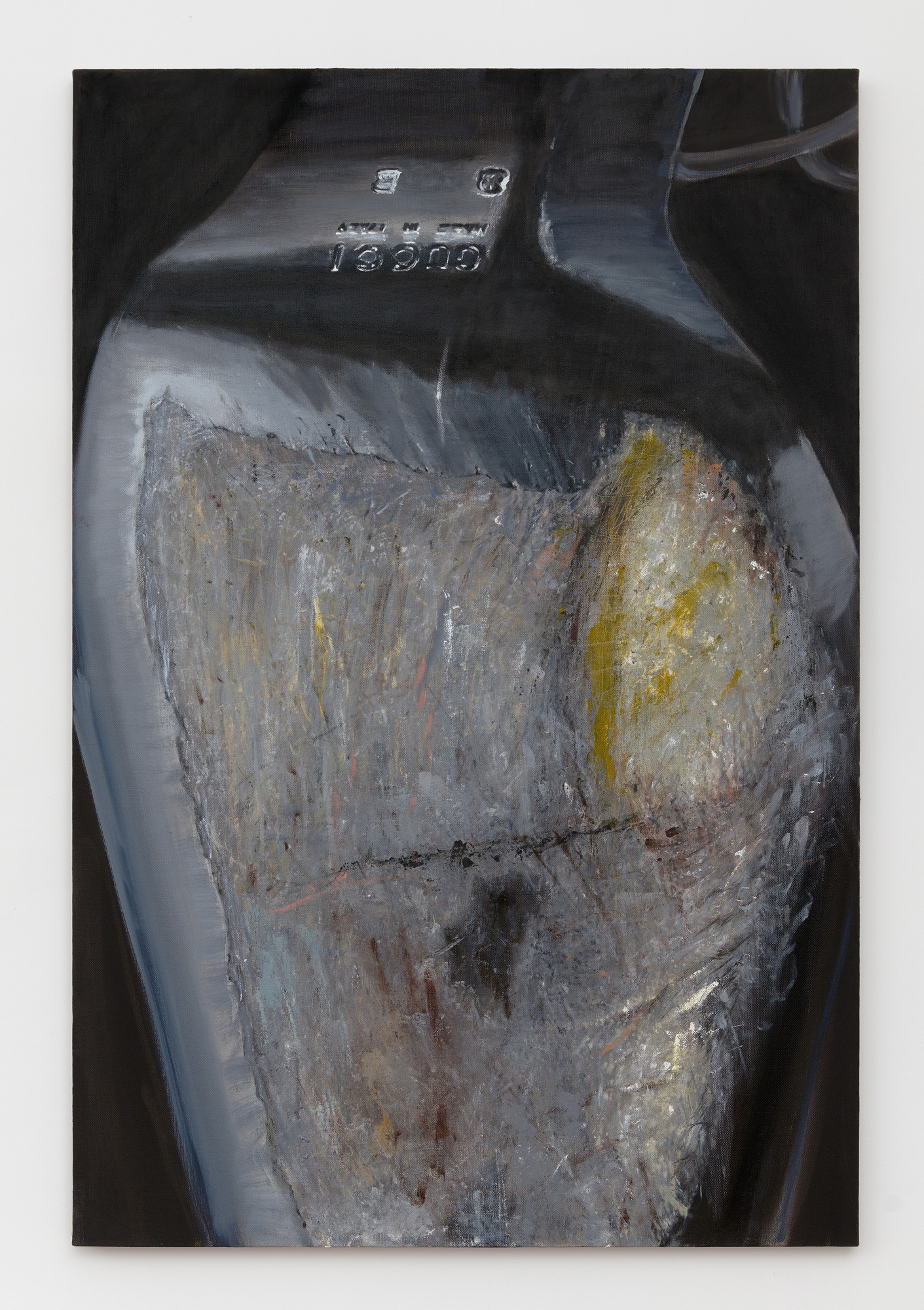
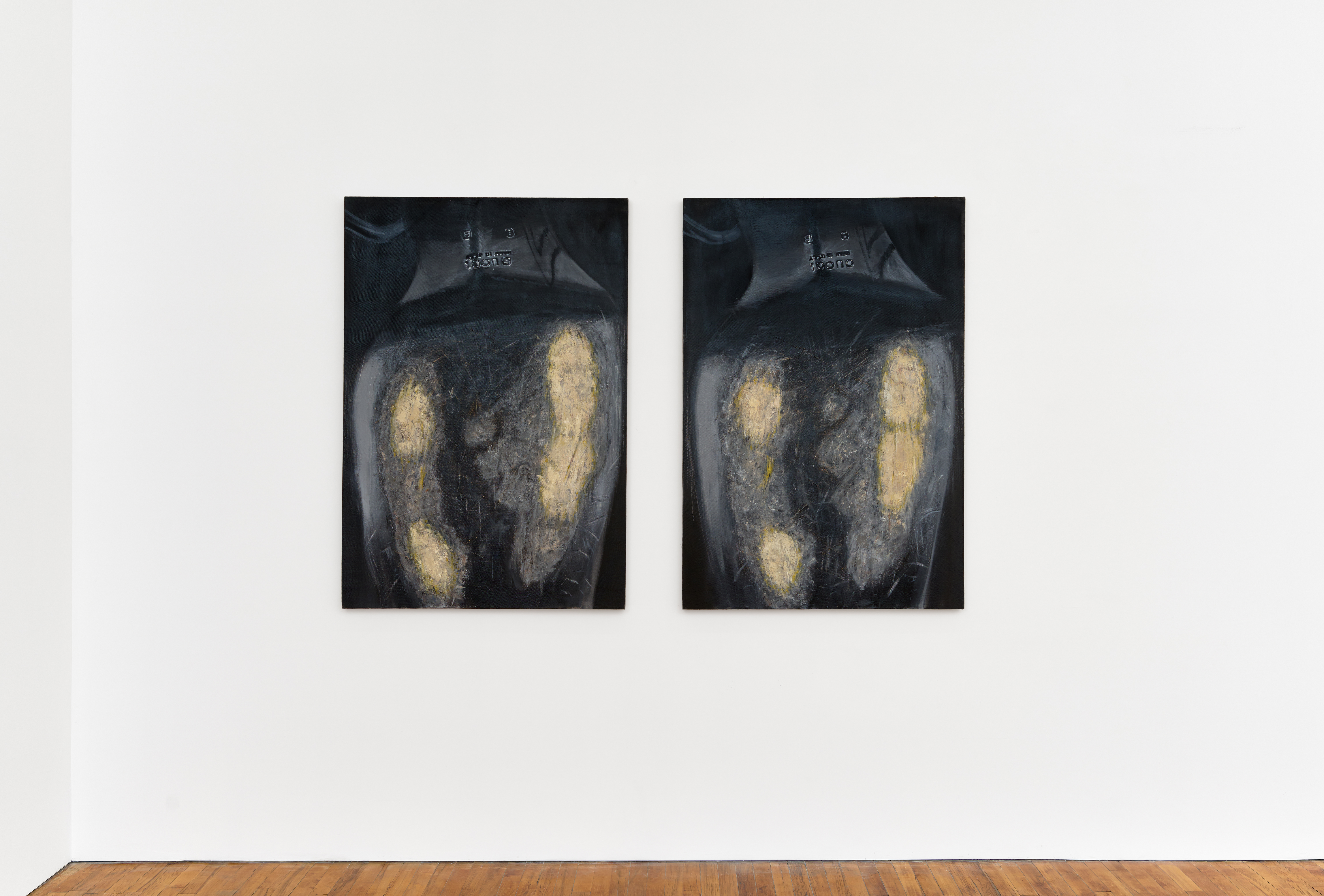
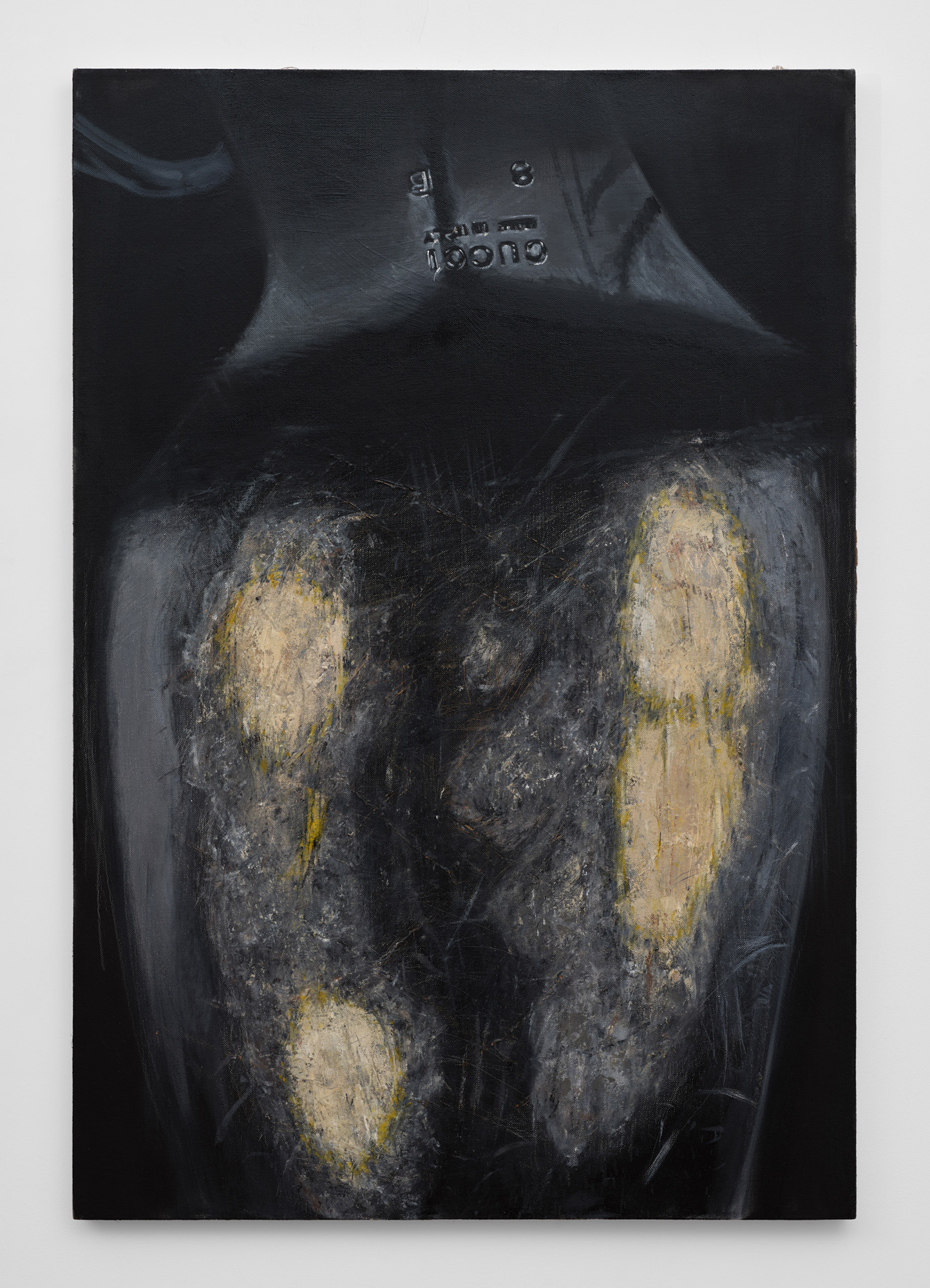
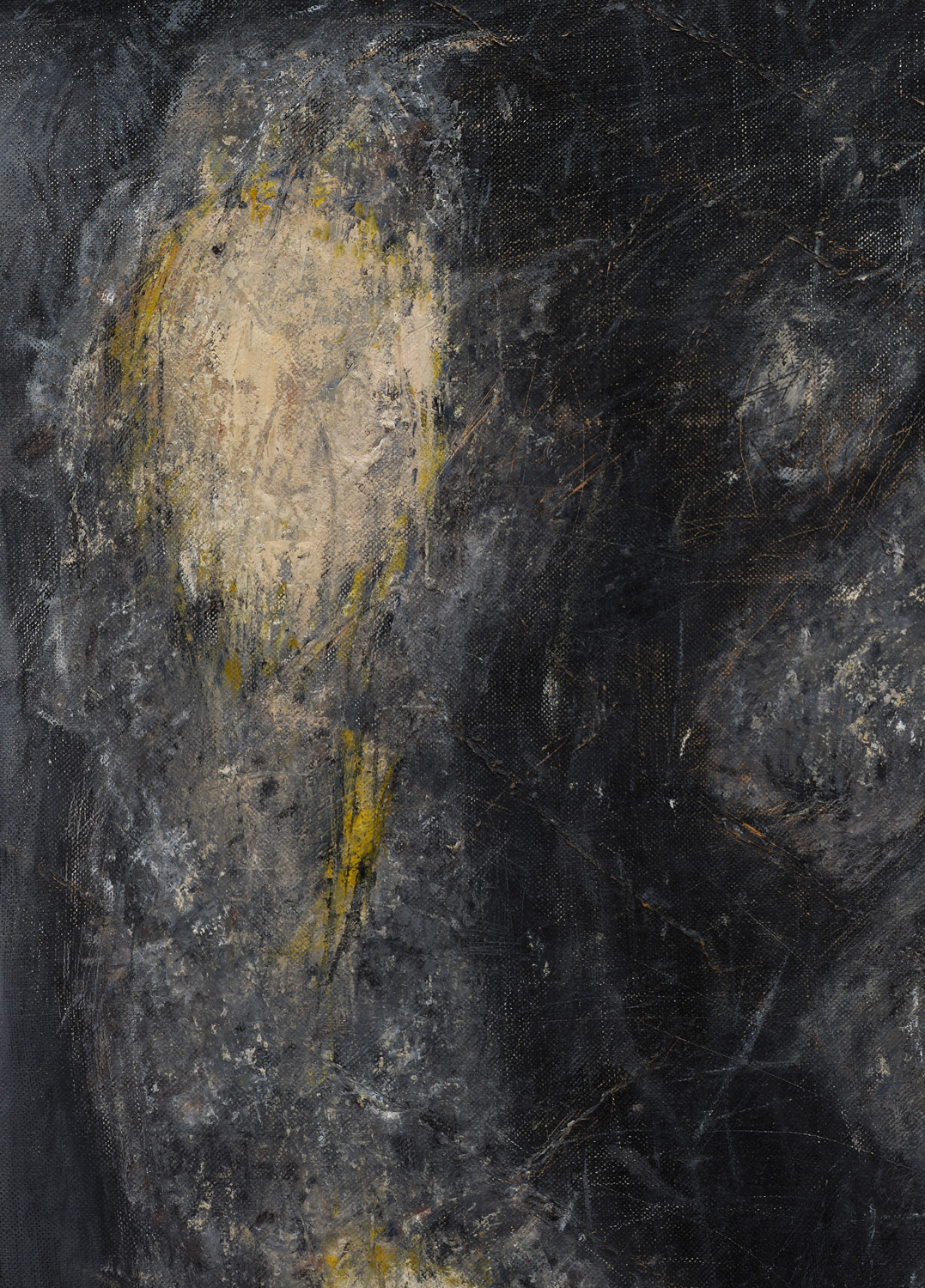
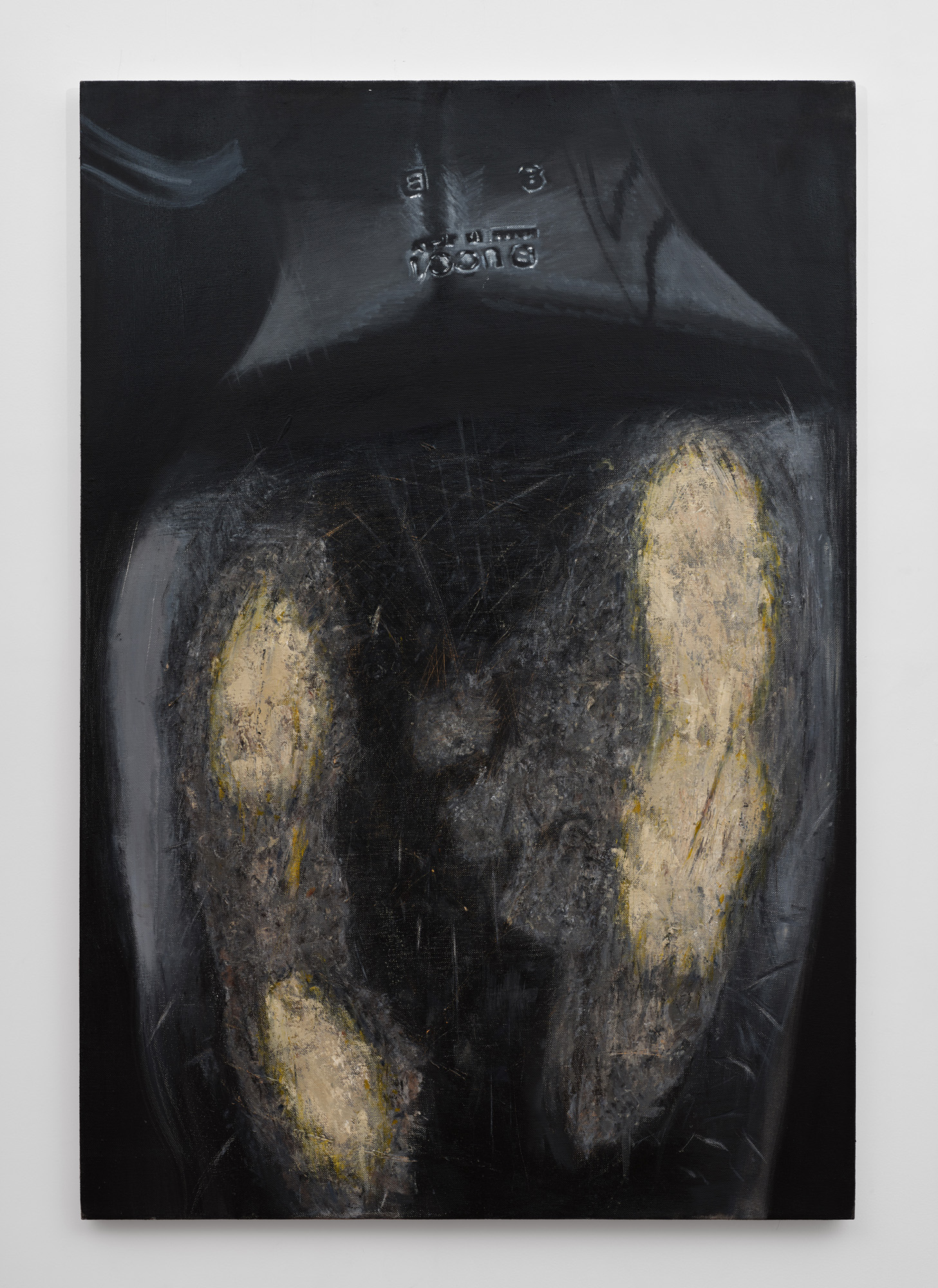
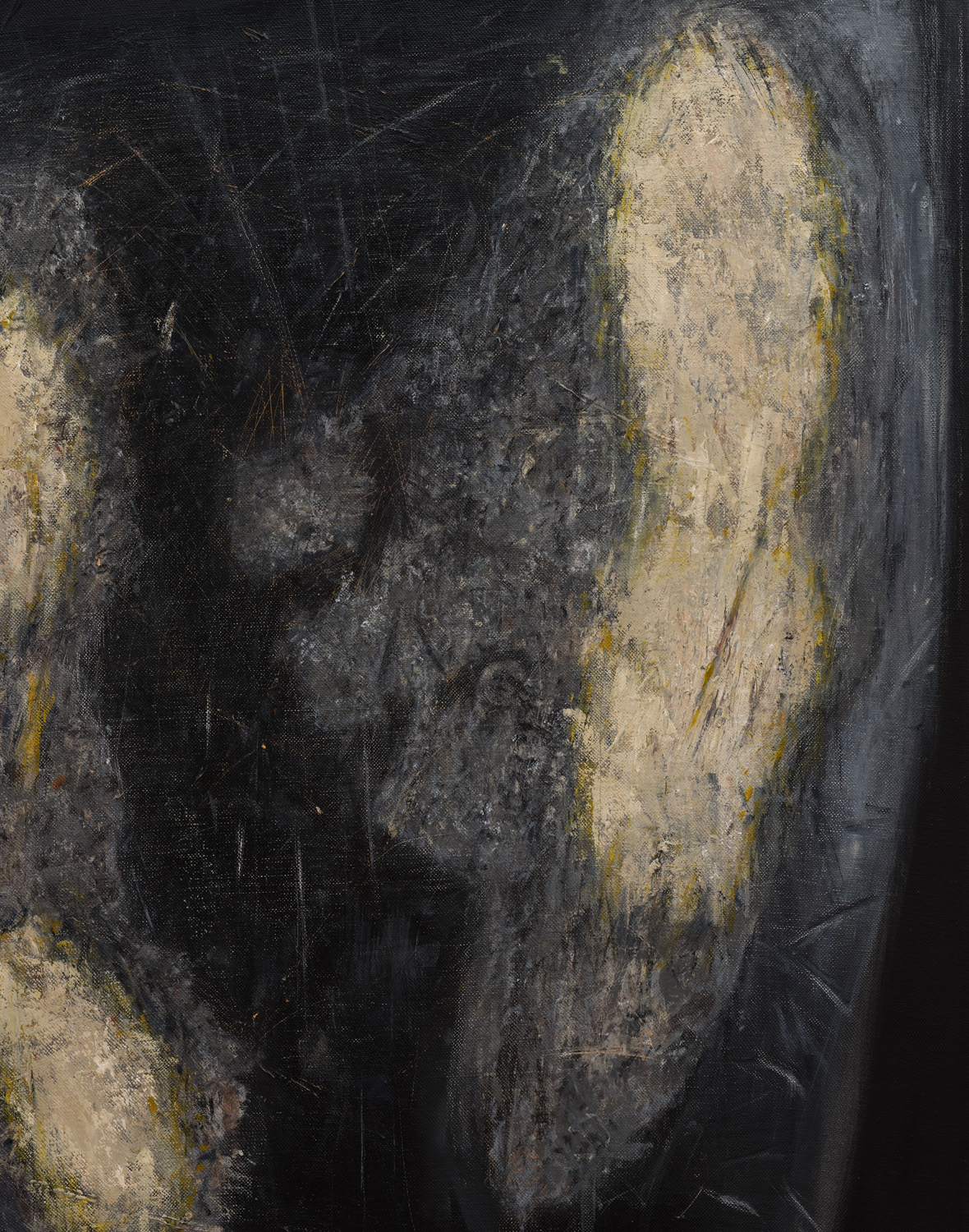
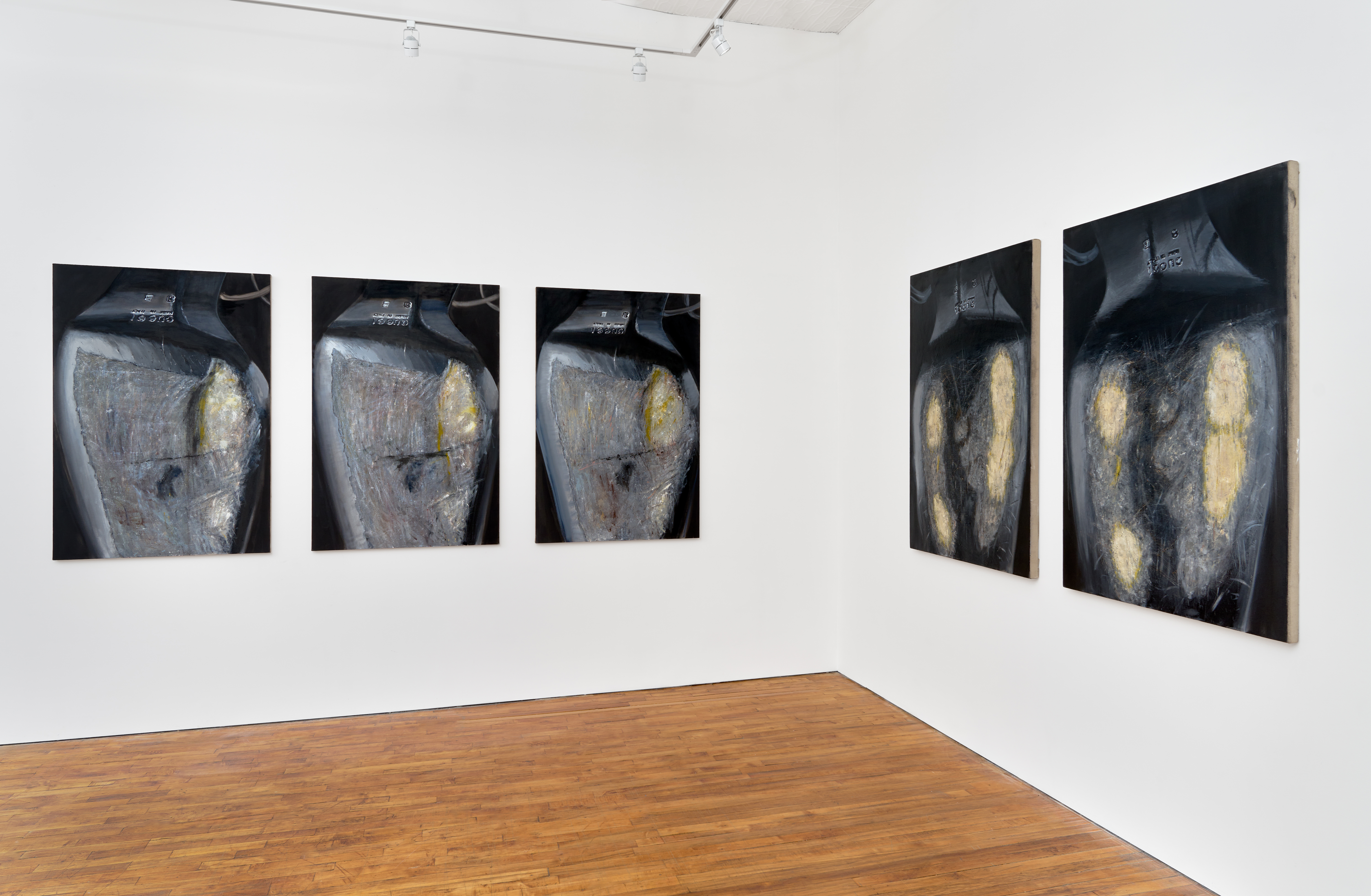
Tara Downs is pleased to present As Is, the debut solo exhibition of artist Madeleine Ray Hines with the gallery. Hines’ practice draws upon found material culled from luxury resale sites, with a particular focus on images of shoe soles, which the artist crops and translates directly into painting. Submitted to a number of adaptations, these images produce strangely abstract, almost architectural compositions, but they also arrive with a sense of narrativity already built-in: price tags, brand names, and most conspicuously the marks left by wear are all meticulously depicted. As Is extends the engagement of this work within a conceptual presentation, which reflects upon the artist’s process while still chronicling a pervasive condition of contemporary life, one that has often eluded pictorial representation.
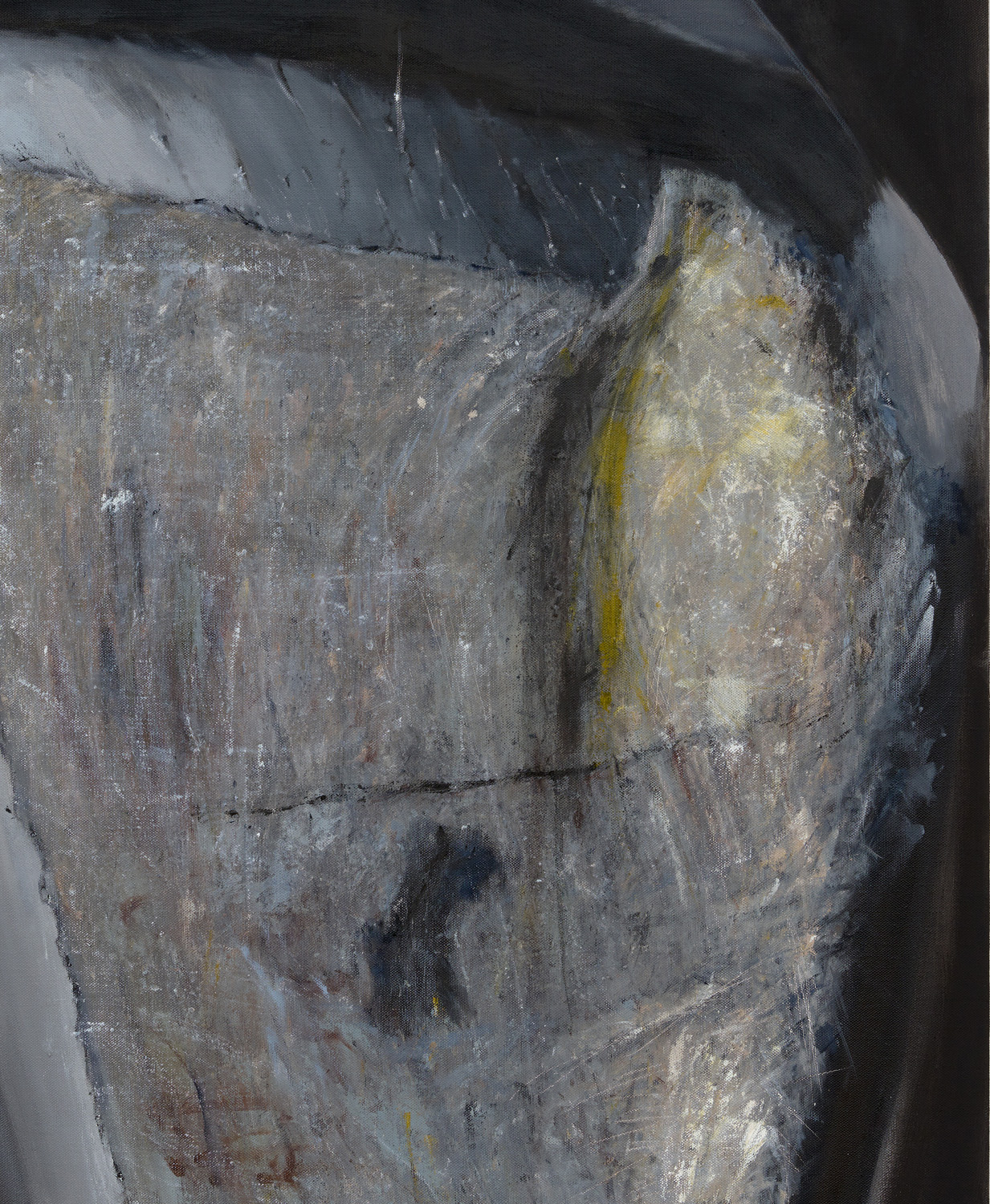
Shorn of their intended function, Hines’ source images carry an evolving relation between consumer and product, as well as between artist and subject. For the contemporary artist, “personal preferences and fashion trends can barely be disentangled,” Isabelle Graw once wrote regarding Sarah Morris’ paintings of high heels. “Fashion is now an omnipresent phenomenon, from which hardly anyone can maintain their isolation.” Over the past twenty-five years, Graw’s statement here has only become more true; once durable, endless signifiers of luxury and leisure, often arbitrated by the images of fashion periodicals, have also seemed to lose their cultural potency. In the online marketplace, personal preference not only entwines with the top-down fashion trend—it supplants it. Against the high-gloss surfaces of Morris’ earlier paintings, Hines revels in the loss of distinction engendered by online shopping, foregrounding the system of distribution rather than the connotations of any individual item. While retaining some of the object’s dominating fetishism, she reorients our position as viewers, shifting our perspective from shop window to sidewalk, literally placing us underfoot. The specter of the modernist grid is therefore displaced by that of the expressionist, indexical mark, which accumulates meaning through repetition. The contextual information accompanying the secondhand product, which reads similarly to an artwork’s condition report, migrates from Depop or The RealReal to the painting’s title—see, for instance, Condition as Pictured I, 2025. And if Hines’ paintings sometimes tend toward pure gesture, it is because the originating images are already experienced gesturally, as fleeting impressions left by frenzied digital activity of scrolling or swiping.
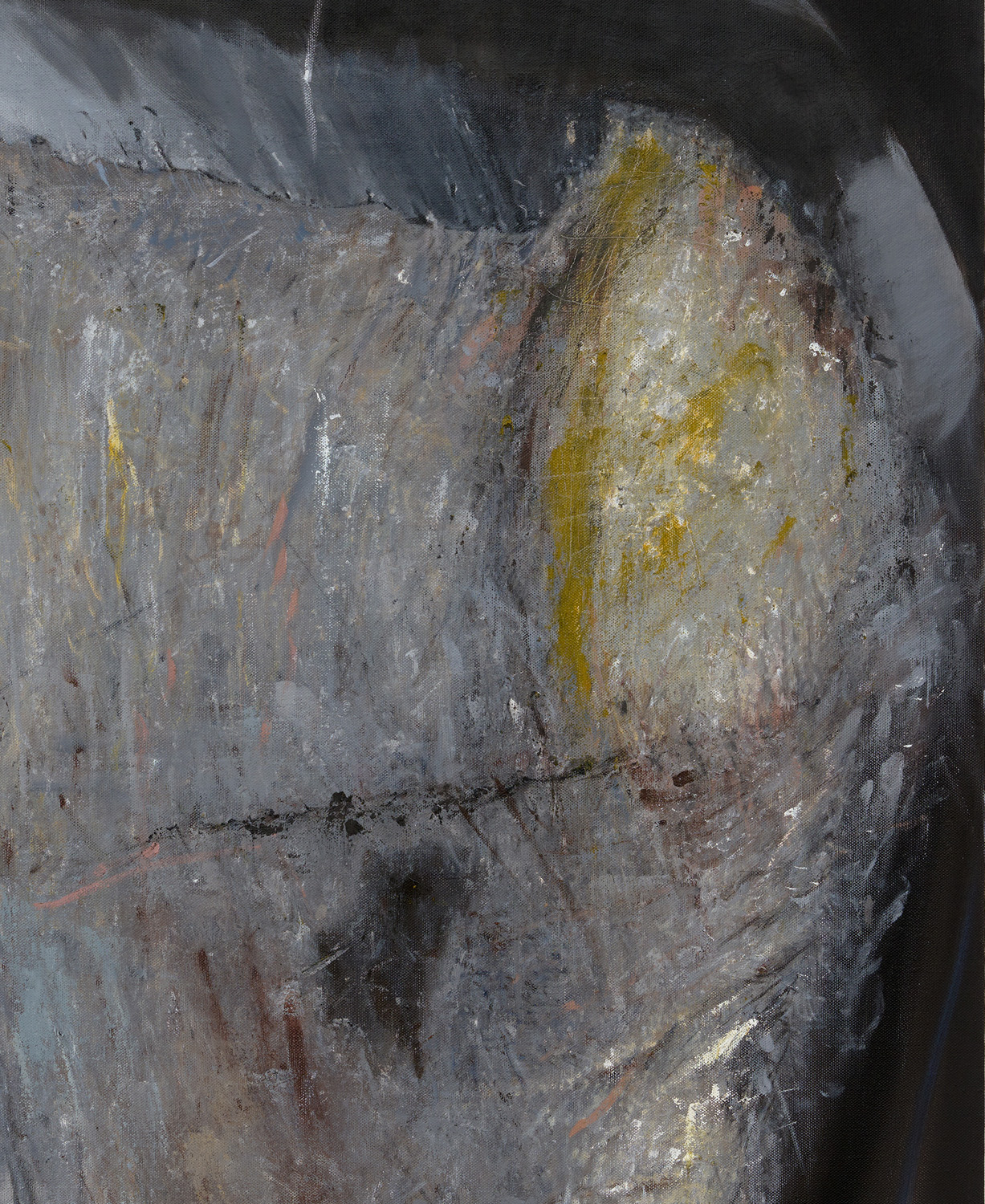
Hines considers, perhaps melancholically, the notion of the heel as a circulating commodity increasingly bought and sold through the mediation of digital imagery, not dissimilar from painting itself. As the critic Jeppe Ugelvig has noted, “paintings, like shoes, have come to live increasingly as virtual commodities on the internet – lingering in the flattened ether of gallery sales PDFs, social media posts, illustrations in online reviews.” With the current exhibition, the artist deepens this correspondence by bringing the two objects into closer formal proximity: the sole of the heel nearly becomes its own intertextual painting, and the repetition of similar images across multiple canvases emulates the heel’s industrially-produced origins. As a suite of paintings closely hung to form a site-responsive installation reminiscent, perhaps, of Andy Warhol’s Shadows, 1978–79, the works suggest a progressive manifestation, building toward an image that is still fundamentally imperfect. The repetition of an image through mechanical reproduction generally results in degradation, but here—with the artist positing herself as both consumer and mediator—something else emerges: an endless loop between object and representation, surface and substance. In a system that prioritizes flatness and interchangeability, Hines’ works instruct us to look for minute shifts and changes rendered through the process of painting—detail and difference draw us in, demanding our attention once again.